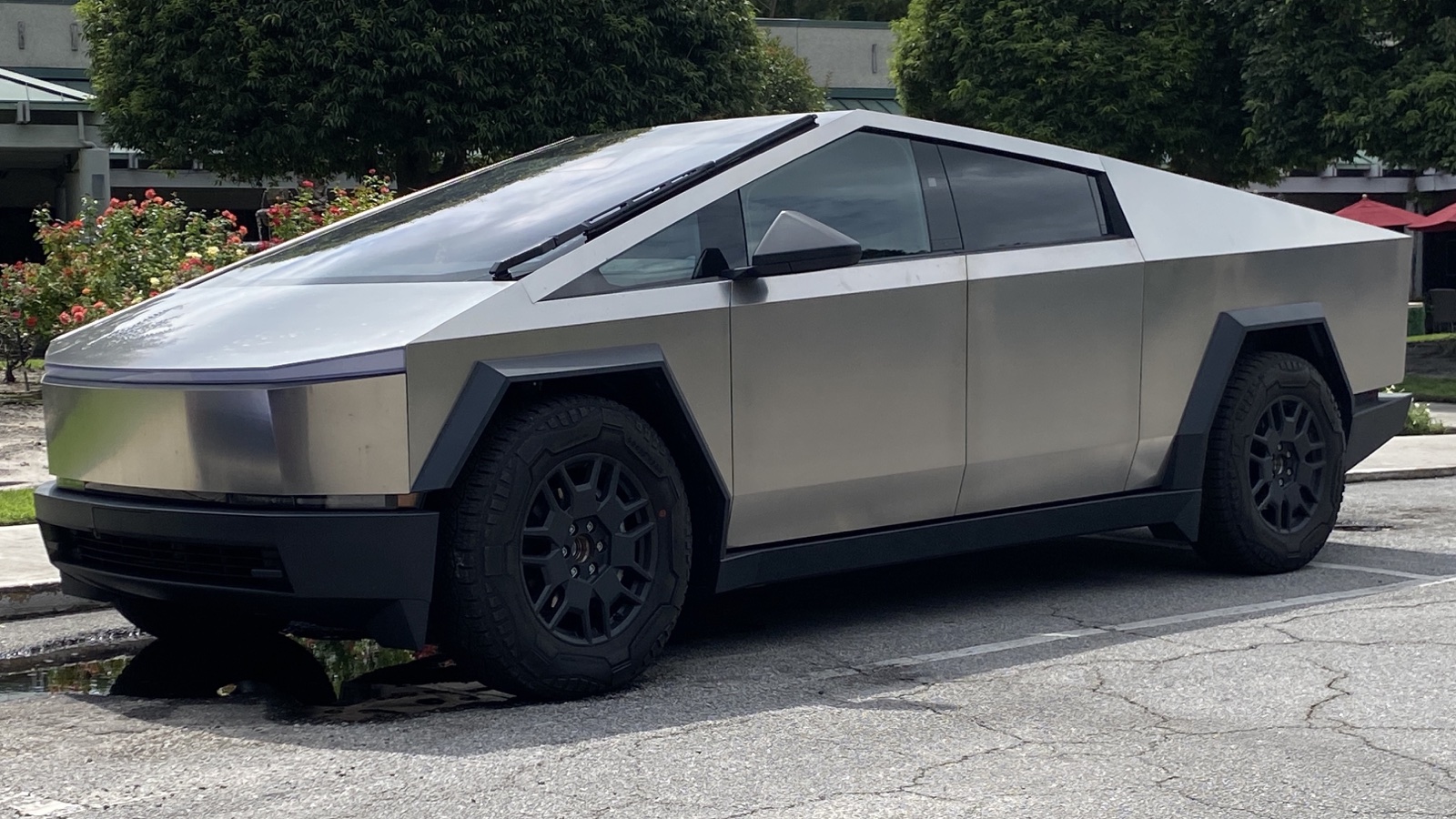
I’ve loved the way the Cybertruck looks since it came out. I was one of its cheerleaders because Tesla had finally built a pickup that didn’t look like every other pickup wearing a different grille. It broke the mold, which was what I liked about it.
Elon Musk says Tesla will wind down production at its Texas factory around the middle of 2027 and use the space for the Cybercab. The announcement has produced the sort of celebration normally reserved for the cancellation of a neighborhood leaf blower.
There’s also a sales comparison getting lost in the celebration. From January 2024 through October 2026, the Cybertruck outsold each of the other electric pickups in Motor Intelligence’s chart. That’s an awkward result for an industry that offered several alternatives to Tesla’s interpretation of a truck.
What the sales numbers say
Musk once forecast annual production of 250,000. Kelley Blue Book estimated that Tesla sold 38,965 in 2024, its first full year, then 20,237 in 2025. Motor Intelligence puts 2026 sales through October at roughly 13,500. That works out to about 72,700 trucks across 2024, 2025 and the first ten months of 2026.
The Ford F-150 Lightning sold 33,510 in 2024, 27,307 in 2025 and another 4,770 from remaining inventory through October 2026. That is roughly 65,600 over the same period. Ford outsold Tesla in 2025, but its cumulative total remained lower.
U.S. sales, 2024 through October 2026
The Rivian R1T, Chevrolet Silverado EV and GMC Sierra EV finished farther back.
America buys pickups by the acre
Ford sold 634,990 F-Series trucks through October this year. The five pickups in Motor Intelligence’s comparison sold fewer than 100,000 combined in 2024, roughly 73,000 in 2025 and about 34,000 through October 2026.
Americans will buy a pickup to commute to an accounting office and feel prepared for a ranch they don’t own. Selling them one with a battery also means selling them on the price, charging arrangements and what happens to range when they tow.
Ford gave buyers a familiar-looking F-150 with electric power and useful onboard electricity. It sold the Lightning through its existing dealers, yet production of that version ended in December 2025.
The next Lightning will be an extended-range electric vehicle, according to Ford. It will carry an engine to generate electricity, giving owners another way to keep moving when towing or charging makes the battery’s range inconvenient.
Tesla made the loudest version
The promised sub-$40,000 starting price disappeared. The production truck arrived late and cost far more. Recalls and quality stories gave people who wanted it to fail a steady supply of evidence, and Musk helped turn the vehicle into a referendum on himself.
Musk’s politics and Tesla’s execution don’t account for the weak sales at the other manufacturers. Ford offered familiar styling, Rivian offered its own design, and GM offered full-size pickups with much larger batteries. Buyers had several ways to avoid the Cybertruck without giving up on an electric pickup.
The Cybertruck still sold more over the period covered by the comparison. Its own sales fell from 38,965 in 2024 to 20,237 in 2025.
The category was the experiment
The automobile business treated electric pickups as inevitable because pickups are popular and electric vehicles were supposed to be the future. Multiplying two large ideas did not produce a large market.
Pickup buyers use their vehicles in ways that expose the battery’s disadvantages. Towing reduces range, large batteries add cost and weight, and many public charging sites make a driver with a trailer unhitch before plugging in. Commercial buyers care about uptime more than acceleration to 60 miles per hour.
Some owners make electric pickups work beautifully. Home charging, predictable routes and onboard power can make one an excellent tool, particularly when the owner knows exactly how far it travels and where it will charge.
Now Ford is adding an engine to its next Lightning. Ram canceled the all-electric 1500 REV. Tesla is clearing space for robotaxis. The remaining electric pickups are fighting over a market that has been getting smaller while the number of choices grew.
I still like the Cybertruck. Its price and sales never came close to the original promises, but Ford’s more conventional answer hasn’t survived in its original form either. That leaves the electric-pickup business with more to explain than Tesla’s choice of bodywork.
Source notes
- Associated Press, “Tesla’s Cybertruck entered the world with fanfare but exits with a short post on X,” November 6, 2026.
- Reuters, “Tesla to pull the plug on Cybertruck after years of poor sales,” November 6, 2026.
- Cox Automotive and Kelley Blue Book, Q4 2024 EV Sales Report, plus full-year 2025 estimates.
- Motor Intelligence, U.S. EV pickup sales for 2024, 2025 and January through October 2026. The 2026 Cybertruck total includes 1,914 October sales.
- Ford Motor Company, October 2026 U.S. Sales Release.
- Ford Motor Company, “Ford Follows Customers to Drive Profitable Growth,” December 15, 2025.
- Hero image: Cutlass/Wikimedia Commons, CC0 1.0.