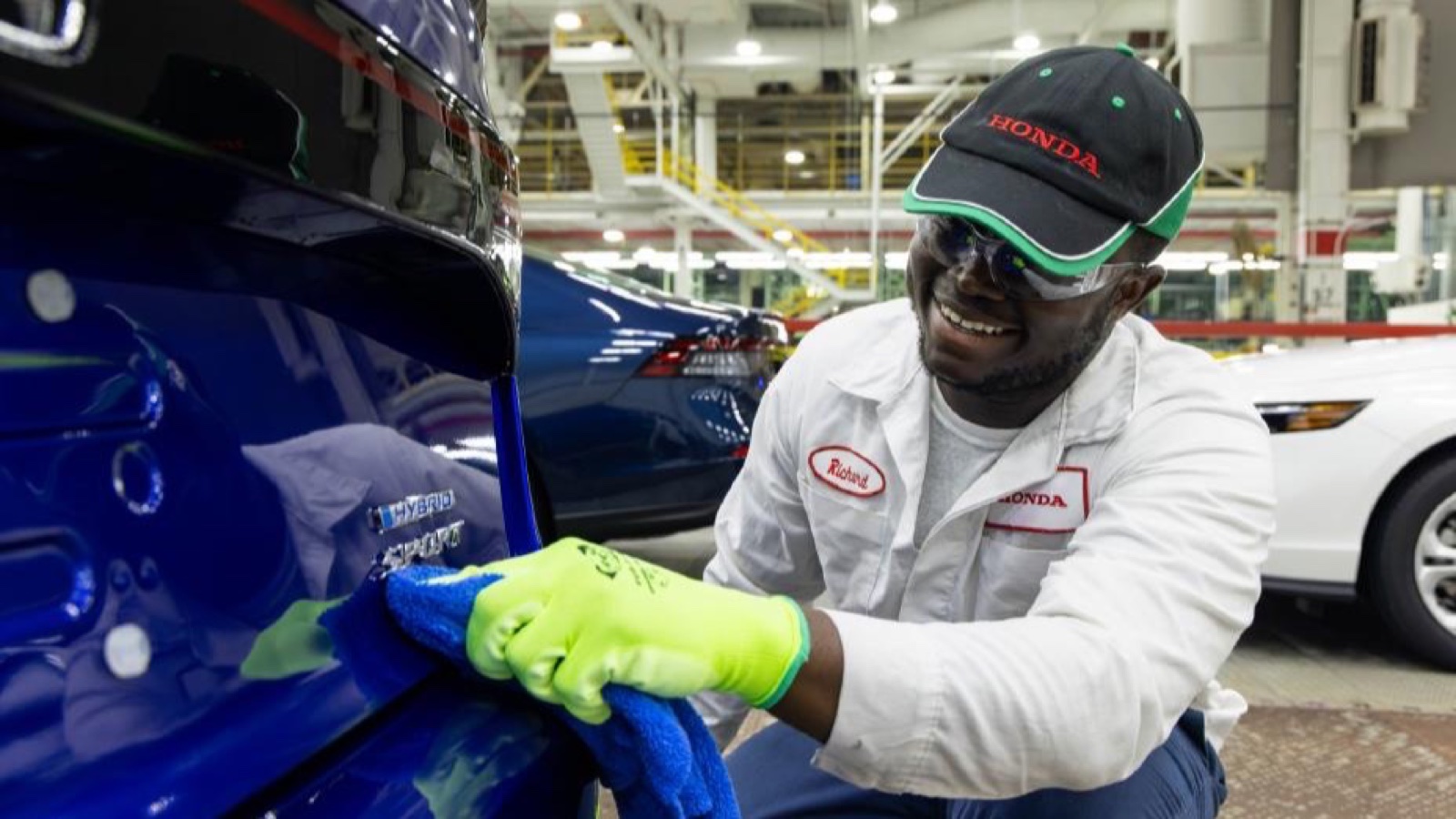
Hybrids have been called a bridge technology for so long that somebody forgot to tell Honda the bridge was supposed to end. Honda announced this week that it will spend $3 billion on a new assembly plant in central Ohio. The plant is expected to employ more than 2,000 people, add capacity for 240,000 vehicles a year and begin production in 2029.
The new plant won’t build hybrids exclusively. Honda says it will be flexible enough to produce gasoline, hybrid and battery-electric vehicles. The stronger evidence of Honda’s commitment to hybrids is in the engine plants and transmission lines being retooled around it.
Follow the machinery
Honda plans to increase hybrid-system production capacity in Ohio by 250 percent. Its Ohio transmission plant is converting an existing transmission line into a second hybrid-system line and preparing two next-generation systems, one for compact and midsize vehicles and another for larger models.
The Anna Engine Plant in Ohio is being retooled for a next-generation four-cylinder Atkinson-cycle engine. Alabama is getting equipment for a new V6 hybrid engine. Georgia will install another assembly line to build hybrid systems for larger vehicles.
Honda also plans to introduce 15 next-generation Honda and Acura hybrid models globally by the end of March 2030. North America will be the primary market for many of them. The company says its next hybrid models begin arriving in 2027, with larger vehicles following in 2029.
Customers already voted
Conventional hybrids accounted for 15.7 percent of U.S. new-vehicle sales through October, according to the National Automobile Dealers Association. That was 3.1 percentage points higher than a year earlier. NADA also says a conventional hybrid takes about half as long to sell as a gasoline vehicle. The cited comparison was 26 days on the lot versus 53.
The federal Energy Information Administration found the same split from another direction. Conventional hybrid share reached 16 percent in the third quarter of 2026. Battery-electric share fell from 10 percent to 6 percent from the same quarter a year earlier. Plug-in hybrids fell from 1.8 percent to 0.7 percent.
A conventional hybrid doesn’t require its owner to arrange charging at home or find a public charger along the way. Put gasoline in it when the gauge gets low, and the car decides when to use the electric motor.
That leaves one less thing to plan on a trip. There’s no map of charging stations to study while eating lunch in a shopping center that wasn’t on the itinerary.
Honda is buying flexibility
Honda is leaving itself room to change the mix. The new plant will be able to build different powertrains as demand changes, and the battery operation nearby will supply cells for hybrid and battery-electric vehicles.
Honda continues to pursue EV development and carbon neutrality. It’s also installing hybrid production lines and preparing new engines for vehicles its customers are buying now. The next hybrid models begin arriving in 2027, with larger vehicles following in 2029, the year the new Ohio plant is scheduled to open.
Source notes
- Honda, “Honda to Boost U.S. Hybrid Production with New $3 Billion U.S. Auto Plant and Investments in Multiple Facilities,” November 10, 2026.
- Honda, “Summary of 2026 Honda Business Briefing,” May 14, 2026.
- U.S. Energy Information Administration, “Hybrid sales rise while battery electric sales remain lower after tax credit expiration,” October 19, 2026.
- National Automobile Dealers Association, “NADA Market Beat: New Light-Vehicle Sales on Pace to Meet or Exceed 16.0 Million Units In 2026,” October 31, 2026.
- Hero image: Photo courtesy of American Honda Motor Co., Inc. Honda does not identify the pictured facility, production line or vehicle model.