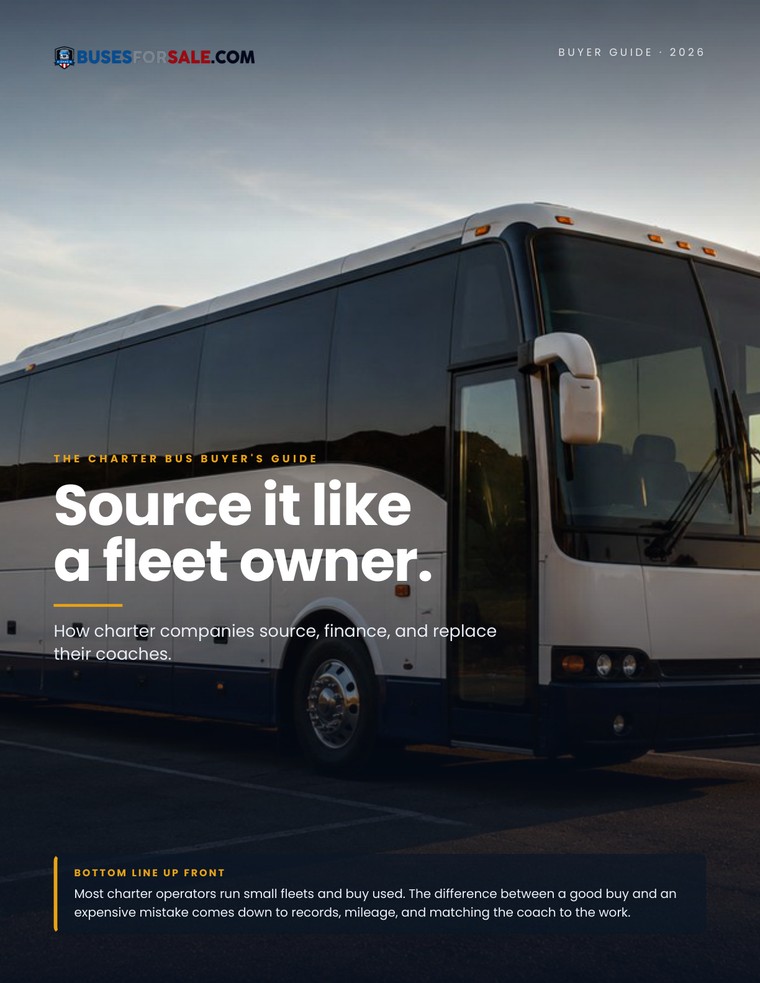
The deliverables
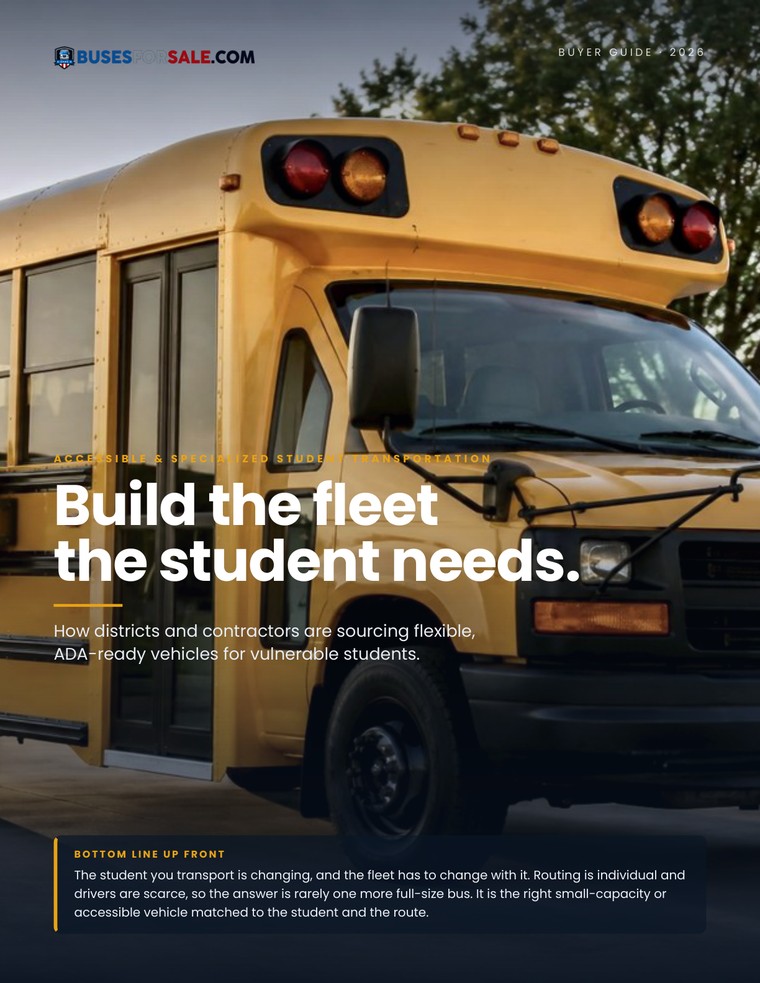
Two sourced, design-built buyer guides for BusesForSale.com. One for charter coaches, one for accessible student transport. Written to move a buyer, not pad a blog.
BusesForSale.com sells used commercial buses to operators who know the equipment better than most vendors do. Charter owners, school districts, contractors. People who can read a maintenance file and spot a tired lift from across the lot.
Content written down to that buyer insults them. Content written for them earns the call.
The work was to build buyer guides that respect what the reader already knows, answer the questions that actually decide a purchase, and point toward inventory at the moment the buyer is ready. Two verticals to start. Charter coaches, and accessible student transport.
Every figure is sourced. Market data from the American Bus Association, regulatory standards from FMCSA and the federal code, pricing framed against BusesForSale.com's own listing data. A buyer who checks the work finds it holds.
Each guide leads with the bottom line and then earns it. The charter guide opens on the one call that separates a good buy from an expensive mistake, which is records, mileage, and matching the coach to the work. The student transport guide opens on the shift driving the whole market, where the rider changed so the fleet has to change with it.
The guide does the convincing before a salesperson ever picks up the phone.
The structure does sales work without sounding like sales. Every section ends with a path into inventory or a quote, placed where a buyer would actually want it instead of bolted on at the end.
A buyer guide that ranks and gets cited keeps earning long after a campaign ends. These are built for that. Clean structure, named entities, sourced claims, the format that search and AI answer engines pull from when a fleet buyer asks the question out loud.
That makes each guide a quiet authority signal for the brand and a qualified-traffic engine at the same time. The buyer arrives already half-sold, because the guide did the convincing on the way in. The shift is not theoretical. The numbers behind it are why this format earns its keep.
Building for citation is only half the work. I also measure whether it lands, through Citala.ai, my GEO practice that tracks which brands AI search engines actually cite. The guide gets built to be found, then checked to confirm it was.
The student transport guide cites School Bus Fleet. I write for School Bus Fleet. The same authority that gets me published in the trade press is the authority I build into the work I produce for clients in it.
That loop is hard to fake and easy to verify, which is exactly why it earns trust with a technical buyer.
Most freelance writers can hand you a blog post. Fewer can build a sourced, designed, multi-page buyer guide that a technical buyer respects and a sales team can put to work. That gap is the whole point.
Yes, more than ever, when they are built right. About 68% of US Google searches now end without a click and AI answer engines field a growing share of research, so the content that gets surfaced and cited is well-structured, sourced HTML. A buyer guide written with real data, clear sections, and named sources is exactly the format AI engines pull from.
Hybrid. Buyers self-direct roughly 80% of the purchase before contacting a vendor and only about 3% fill out forms, so the front-door content should be ungated for discovery and AI citation. Reserve a form for a genuinely high-value, bottom-funnel asset. Gating your best educational content hides it during the window when the buyer is forming an opinion of you.
Cited statistics, quoted sources, an authoritative voice, and clean heading structure. Peer-reviewed research on generative engine optimization found those attributes can raise a page's visibility in AI answers by up to 40%. Every guide I build is sourced to primary data for exactly that reason.
I build buyer guides, content audits, and embedded content programs for automotive, fleet, and B2B brands. And through Citala.ai, my GEO practice, I measure whether that content actually gets cited by AI. Start with a content audit sprint, or talk through a retainer.
Work with me →