A disclosure before we go any further. I have not driven the 2026 Toyota RAV4 Hybrid. My son owns a previous generation model. He bought it because everyone has one, which is as honest a purchasing rationale as any I have heard. He loves it. As a couple it has everything they need. He trusts it the way you trust a Toyota — not because it excites him but because it has never given him a reason not to. I have spent time in it. I have an informed perspective on the segment, the buyer, and what Toyota has done with this redesign. I am going to tell you what the car is and what it means, and I am going to be honest about where my direct experience with this specific generation ends.
That honesty matters here because the 2026 RAV4 Hybrid is not really a car review story. It is a market story. Toyota just made one of the most consequential product decisions in the compact SUV segment in twenty years and most of the coverage has been about fuel economy numbers and touchscreen sizes. The actual story is bigger than that.
Buy the XLE Premium AWD at around $37,500. The 2026 RAV4 Hybrid is not the most exciting compact SUV in the class — the Hyundai Tucson Hybrid drives better and the Kia Sportage Hybrid has more cargo space — but it wins on reliability history, resale value, and thirty years of not letting people down. Those are real advantages. If you want low-drama, long-haul ownership with strong residuals, nothing in this segment beats it. Drive the Tucson first anyway.
The Decision That Actually Matters
For 2026, Toyota eliminated the gasoline-only engine from the RAV4 lineup entirely. Every RAV4 is now a hybrid or a plug-in hybrid. No exceptions. This is not a footnote. This is Toyota, the most conservative and market-literate automaker on the planet, making an irreversible call on the most popular vehicle in America.
The RAV4 sold 475,000 units in 2024. It is not the most popular SUV in America. It is the most popular passenger vehicle in America. When Toyota decides that vehicle goes hybrid-only, they are not making a statement about environmental policy or regulatory compliance. They are making a statement about what 475,000 American buyers per year actually want and will continue to pay for.
The EV advocates spent the last decade telling us that hybrids were a transitional technology. Toyota just looked at the data and made the opposite bet.
They did not go full electric. They went full hybrid. On the car that more Americans buy than any other. That is not a coincidence. That is a company that understands its customer better than the people writing op-eds about the future of transportation.
What You Actually Get
The standard hybrid pairs a 2.5-liter four-cylinder with electric motors for 226 horsepower in front-wheel drive and 236 in AWD. The plug-in hybrid gets 324 horsepower and 50 miles of electric-only range. FWD hybrid models are EPA-rated at 44 mpg combined, which on a 14.5-gallon tank means a realistic range approaching 640 miles. AWD versions come in around 42 to 44 mpg combined. These are class-leading numbers by a meaningful margin.
Pricing starts at $31,900 for the base LE with FWD and runs to $43,300 for the Limited AWD. The hybrid premium over a comparable gas-only competitor effectively disappears when you factor in that the RAV4 no longer offers a gas-only option to compare against. You are not paying extra for the hybrid system. You are just buying the car.
Cargo space is 37.8 cubic feet behind the rear seats and 70.4 folded, which puts it near the top of the class. AWD models tow 3,500 pounds. Toyota Safety Sense 4.0 is standard across the lineup, which is the right call and the kind of thing that should be table stakes but still isn't everywhere. Edmunds tested the FWD hybrid at 7.5 seconds to 60 mph. Competent. Not quick. The plug-in hybrid GR Sport hit 5.6 seconds in their testing, which is genuinely surprising for a compact family crossover.
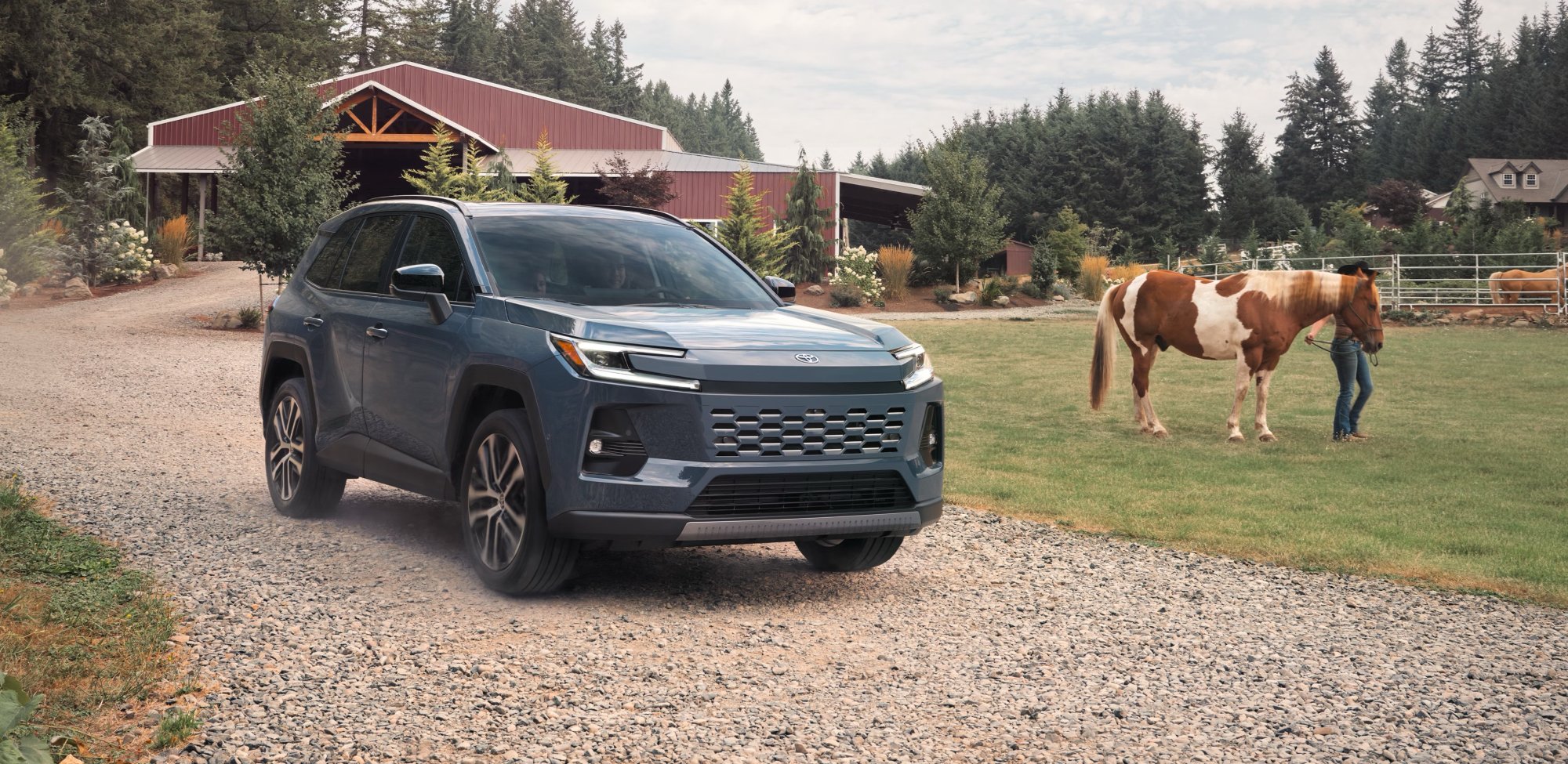 2026 Toyota RAV4 Hybrid · Photo courtesy of Toyota
The Toyota Interior Problem Has Not Gone Away
I have a theory about Toyota interiors that I have held for roughly twenty years and nothing in the 2026 RAV4 has given me reason to revise it. Toyota designs cabins for a buyer who needs the vehicle to function correctly for 200,000 miles without drama. That buyer exists in enormous numbers and Toyota is absolutely right to build for them. The plastics are durable. The controls are straightforward. Everything is where you expect it because Toyota has been putting things in the same general location since the Clinton administration.
None of this is pleasant to sit in. Durable and pleasant are different things. The materials communicate reliability rather than quality, which is a Toyota choice and not an accident. My son's RAV4 interior looks almost exactly the same as it did when he bought it. It will probably look the same in another five years. Whether that is a compliment depends entirely on your priorities.
The 2026 redesign made one genuinely bad interior decision. Toyota replaced the large physical climate control dials that were a RAV4 hallmark with touchscreen controls. Temperature buttons remain physical, which is something. But the old dials could be operated without looking at them, which is what good interior design enables. Their absence is the kind of thing that irritates you on the tenth day of ownership, not the first.
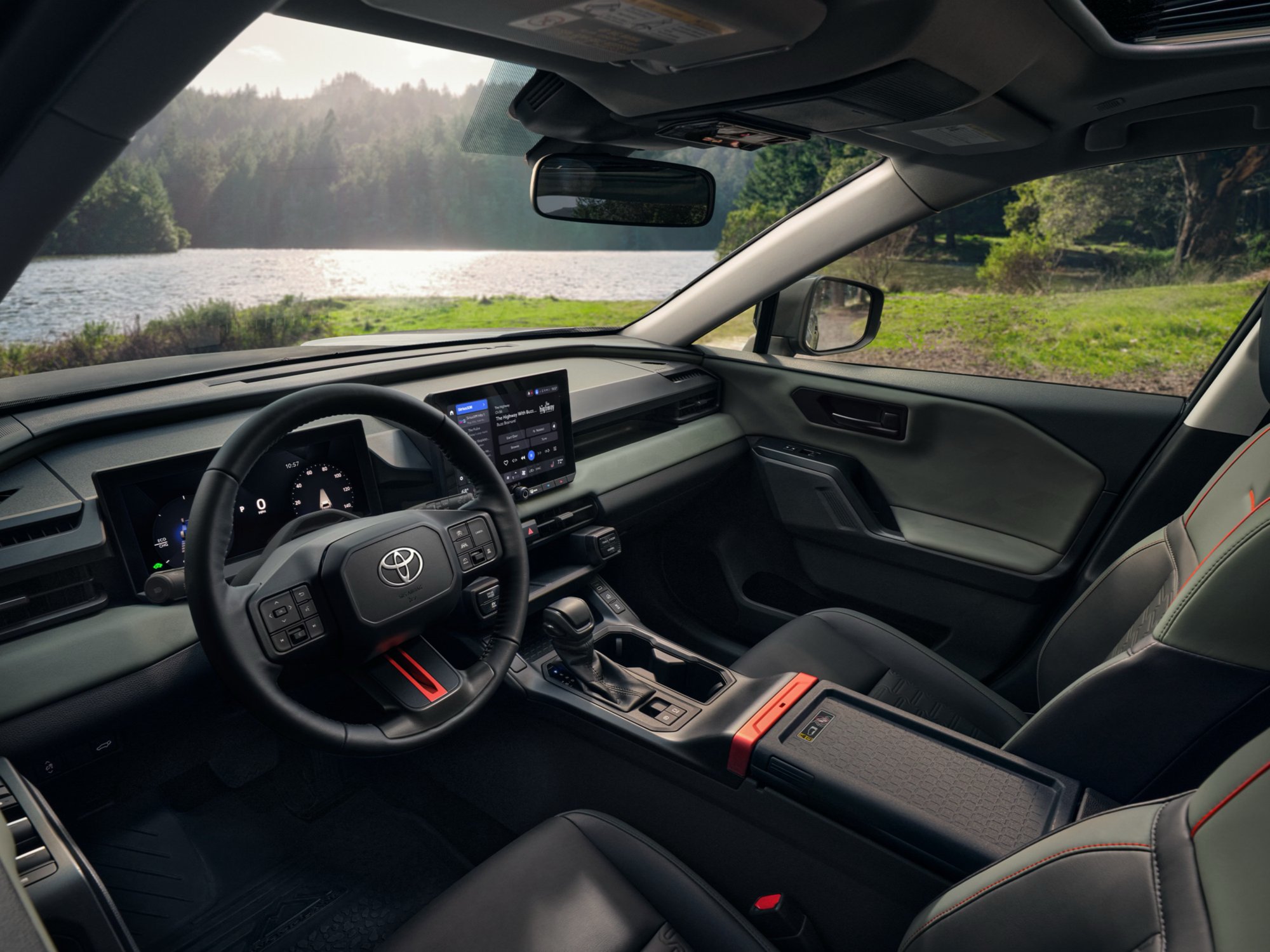 2026 Toyota RAV4 Hybrid interior · Photo courtesy of Toyota
The Ubiquity Problem, Which Is Not Really a Problem
On the way back from a beach day at Corona del Mar recently, I counted Tesla Model 3s the way you count license plates on a road trip. Every intersection. Every day in SoCal is a Tesla parade. People take real comfort in numbers. There is genuine reassurance in buying something that everyone around you has also bought. It means parts are available, mechanics know the car, resale holds, and the decision has been socially validated by several hundred thousand other people who went through the same process and arrived at the same conclusion.
The RAV4 operates on the same principle at a larger scale. This will bother exactly the kind of person who is not buying a RAV4 anyway. The person actually shopping one has already made their peace with it, the same way they have made their peace with the fact that a lot of people eat Doritos. Popular things are popular for reasons. The RAV4's reasons happen to be legitimate.
I would not personally choose a RAV4. My preference for an SUV runs toward an Audi SQ8 or something with an AMG badge — fast, tight, and indifferent to the commute it is being used for. That preference is shared by roughly three percent of the buying public. The other ninety-seven percent are not wrong. They just want something different from what I want, which is their right, and Toyota has spent thirty years understanding exactly what they want better than anyone else in the business.
What the Data Says About How It Actually Drives
Edmunds ranked the 2026 RAV4 Hybrid third in its class, behind the Hyundai Tucson Hybrid and the Kia Sportage Hybrid. The Tucson and Sportage score higher on ride quality, interior refinement, and driver engagement. Edmunds specifically noted that rivals with turbocharged engines are sportier to drive and soak up road imperfections with more grace.
This is worth naming plainly because the RAV4's sales numbers can create a false impression that it is the segment's best vehicle. It is not. It is the segment's most trusted vehicle, which is a different thing. The Tucson Hybrid is objectively more pleasant to drive and live with. The Sportage Hybrid has more interior space and a stronger powertrain feel. If you are shopping this segment and you have not driven those two, you are not done shopping.
The RAV4 wins on reliability expectation, dealer network, resale value, and the accumulated trust of thirty years of not letting people down. Those are real advantages. They are not driving dynamics advantages. Know the difference before you write the check.
Which RAV4 to Buy If You Are Buying One
The XLE Premium AWD is the sweet spot in the lineup at around $37,500 before destination. You get heated front seats, wireless charging, a power liftgate, and AWD without paying Limited money for ventilated seats and a larger screen you do not need. It is the trim that sells in the highest volume for a reason. Toyota knows where the value is in their own lineup.
If you want something that moves with actual authority, consider the PHEV. At 324 horsepower, 50 miles of electric-only range, and a 5.6-second 0-60 time, it is a meaningfully different vehicle from the standard hybrid. The XSE PHEV with AWD opens around $44,000. If you can charge at home and your daily commute fits within the electric range, the fuel economics make the premium defensible within eighteen months.
The Woodland is worth a look if you actually use your SUV off-road rather than just buying one to look like you do. All-terrain tires, increased ground clearance, a tow hitch, and a roof rack come standard. It is the only RAV4 trim that is honest about what an SUV is supposed to be capable of.
The Verdict: Right Car, Right Moment, Right Decision
The 2026 Toyota RAV4 Hybrid is not the most exciting vehicle in its segment. It is not the best to drive, the most refined, or the most distinctive. It will not make you feel anything particular when you open the door on a Tuesday morning. It will start, it will get 44 miles per gallon, it will accommodate your family and your cargo and your life without complaint, and it will be worth real money when you go to sell it. It has been doing this for thirty years and Toyota has no intention of changing the formula.
The bigger story is what Toyota's decision tells us about where the market actually is versus where certain people wish it were. They did not go electric. They went hybrid. On the vehicle that more Americans buy than any other. That is not timidity. That is a company that has been paying very close attention while everyone else was debating the future.
People buy a lot of Doritos too. Regardless of the opinions from people like me that Doritos are death in a bag, they have been around since 1966 and they are still in every gas station in America because someone figured out what people actually want and never stopped making it. There are worse business models.
| Engine | 2.5L four-cylinder hybrid / 2.5L four-cylinder PHEV |
| Output | 226 hp FWD / 236 hp AWD (hybrid) / 324 hp AWD (PHEV) |
| Transmission | Electronic CVT |
| Drivetrain | FWD or AWD |
| 0–60 mph | 7.5 sec (FWD hybrid) / 5.6 sec (PHEV GR Sport) |
| Fuel Economy | 44 mpg combined FWD / 42–44 mpg AWD |
| PHEV Electric Range | 50 miles |
| Cargo | 37.8 cu ft (seats up) / 70.4 cu ft (seats folded) |
| Towing | 1,750 lbs FWD / 3,500 lbs AWD |
| Price | $31,900–$43,300 (hybrid) / $44,265–$48,135 (PHEV, est.) |
| Assembly | Georgetown, Kentucky and Canada |
| Warranty | 3 yr / 36,000 mi basic · 5 yr / 60,000 mi powertrain |
Should You Buy the 2026 RAV4 Hybrid?
If you came here looking for a reason not to buy it, you are not going to find one. The RAV4 Hybrid does not have a meaningful weakness in the context most of its buyers actually live in. Reliable, efficient, practical, capable enough, and it holds its value. The case against it is almost entirely aesthetic — it does not excite, it does not distinguish, and it will not make strangers ask what you are driving.
If any of that matters to you, drive the Tucson Hybrid first. Edmunds ranked it above the RAV4 for a reason. The interior is nicer, the ride is more composed, and Hyundai's powertrain is more engaging. The Kia Sportage Hybrid makes a similar argument with more cargo space. These are better vehicles by several measurable criteria. The RAV4 beats both of them on reliability expectation, dealer coverage, and resale. Know which of those things you are actually optimizing for.
Buy the RAV4 Hybrid if you want the Toyota reliability record, the dealer network, and the resale floor that comes with the badge, and you have no strong feelings about whether a commute vehicle sparks joy. That is a rational decision made by a lot of rational people every year. The car earns it.
On the hybrid versus plug-in question: if you have a garage, a charger, and a daily round trip under 50 miles, the PHEV math closes within 18 to 24 months. If neither condition applies, the standard hybrid delivers essentially the same ownership experience without the price premium.
Short version: yes, buy it. Just drive the Tucson first so you know what you are trading away.