If you've narrowed your search to a compact hybrid SUV and you're down to these two, you've already done most of the work. The RAV4 Hybrid and the CR-V Hybrid are the clear-eyed choices in a segment cluttered with overcomplicated powertrains and manufacturer hedging. Both companies have been building hybrids long enough to work out the early-adopter anxiety. Neither one is going to strand you.
Buy the RAV4 Hybrid if fuel economy, towing capacity, or long-term resale matter to you — it wins on all three, and its starting price is lower than Honda's. Buy the CR-V Hybrid if you regularly carry rear passengers who need legroom or you want the option to skip the hybrid premium with a gas-only trim. Either way, you're buying a good vehicle. But they're not the same vehicle, and the gap between them is wider than Honda would prefer you to know.
The question is which one is actually better, and for whom.
For the full case on the RAV4 Hybrid as a standalone vehicle, the review is here. This piece is for the buyer who needs a direct comparison and a verdict.
The Numbers First
The 2026 RAV4 Hybrid starts at $33,350 and runs to just under $50,000 fully loaded. It produces 236 horsepower and gets an EPA-estimated 43 mpg combined on FWD configurations. All-wheel drive trims come in slightly lower, around 40 mpg combined. Towing capacity is 3,500 pounds.
The 2026 CR-V Hybrid starts at $35,360 and tops out around $44,455. It makes 204 horsepower and returns 40 mpg combined across most configurations. Towing capacity is 1,000 pounds.
That's a 32-horsepower gap, a 3-mpg combined efficiency advantage for Toyota, and a 2,500-pound difference in towing. The RAV4 also enters at a lower base price despite the powertrain advantage.
Honda has more rear-seat legroom and greater maximum cargo volume. If you regularly carry adults in the back seat, that's a real consideration, not marketing filler.
The Reputation Question
Toyota built the hybrid category. The Prius arrived in the US in 2000, the RAV4 Hybrid launched in 2016, and Toyota has since converted the entire RAV4 lineup to hybrid-only in the US. When a manufacturer makes that call on their best-selling vehicle, they're not guessing.
That history matters in depreciation curves and reliability data. RAV4 Hybrids hold value well, partly because of real-world durability and partly because brand trust compounds. There's a waiting market for used RAV4 Hybrids at every price point.
Honda doesn't carry the same hybrid heritage, but the CR-V Hybrid is a genuinely competent vehicle. The 2.0-liter Atkinson-cycle engine paired with two electric motors is Honda's own system, not a licensed Toyota architecture. The engineering is sound. The execution is clean. What Honda doesn't have is Toyota's accumulated reputation in this specific powertrain category, and in the used market that gap shows up in resale value.
What Honda Gets Right
The CR-V has more usable rear-seat space than the RAV4, and the difference is noticeable if you're regularly carrying adults on longer trips. The maximum cargo volume is also larger with seats folded.
The interior is also genuinely better. The RAV4's cabin is functional and durable, which is exactly what you'd expect from Toyota — but below the XSE trim it leans heavily on hard plastics and utilitarian switchgear. The CR-V's dashboard, door panels, and material choices feel more considered. Honda's infotainment integration is cleaner. Buyers notice this on the test drive even when the spec sheet doesn't capture it.
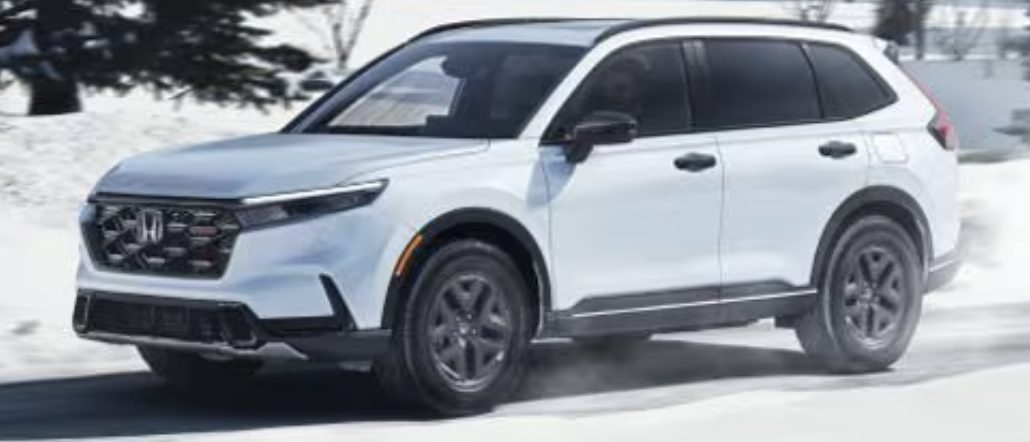 2026 Honda CR-V Hybrid — competitive in a major city, genuinely better interior
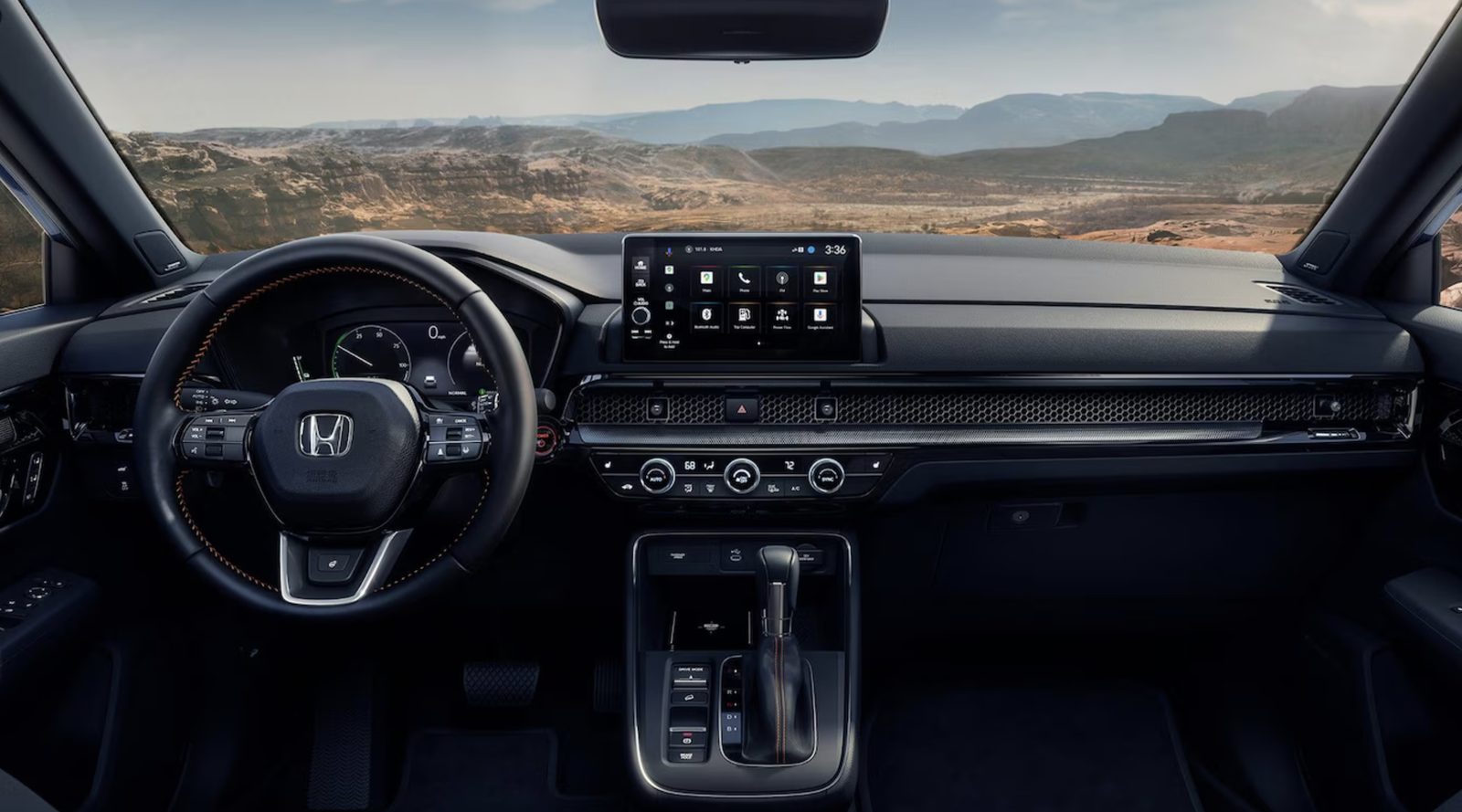 2026 CR-V Hybrid interior — more considered material choices than the base RAV4 trims
Honda's mid-range trim pricing is competitive. At equivalent feature levels, the CR-V Sport Hybrid delivers a reasonable value proposition. And because Honda still offers gas-only CR-V trims, buyers who want to keep the option open get more flexibility on the lot.
If you're in a major city, towing is irrelevant, and interior quality matters as much as efficiency, the CR-V is the honest choice.
What the RAV4 Gets Right
Everything that moves. The efficiency advantage compounds over time at California gas prices — 3 mpg combined on a vehicle you keep for 10 years and drive 12,000 miles annually is roughly $600 in fuel savings at current prices. That's before accounting for the RAV4's stronger resale value, which tends to recover the price premium at the point of sale.
The towing number is not a footnote. A 3,500-pound rating means a lightweight travel trailer, a boat, a loaded utility trailer. The CR-V Hybrid's 1,000 pounds covers a small cargo trailer and not much else. If there's any possibility you'll want to tow something in the next decade, the CR-V Hybrid is not the right vehicle.
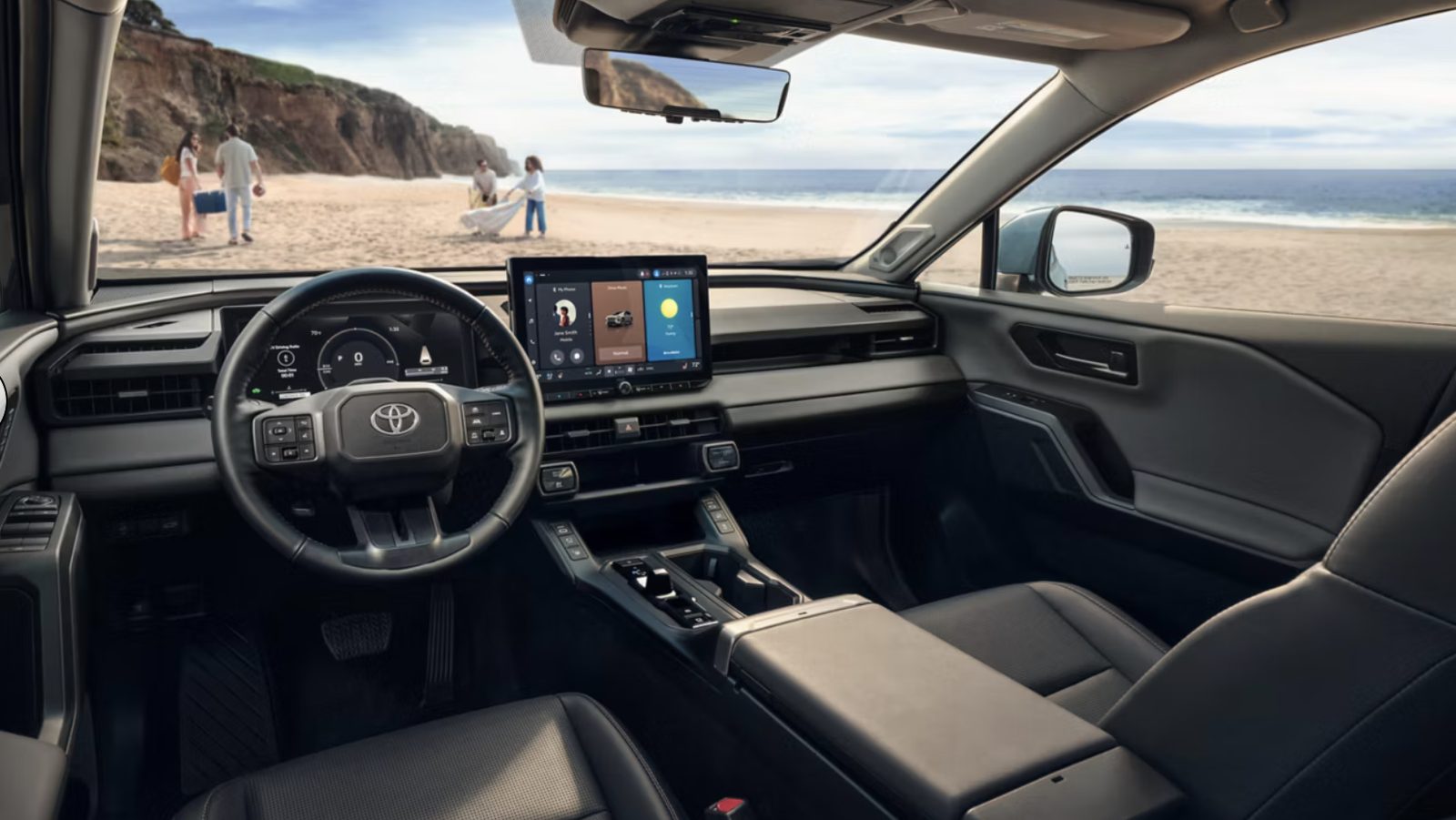 2026 RAV4 Hybrid interior — functional, durable, and improved significantly above XSE trim
The 236-horsepower figure also matters on-ramp, on steep grades, and when you're merging onto a California freeway in 95-degree heat with four people and luggage. The CR-V's 204 is adequate. The RAV4's 236 is confident.
The Verdict
Toyota is selling on reputation, and in this case the reputation is backed by the specs. Better efficiency, more power, stronger tow rating, lower starting price, proven resale trajectory. The RAV4 Hybrid is the better hybrid.
The CR-V Hybrid is the better argument for a buyer who needs more rear space or can't justify any hybrid premium, in which case the gas-only CR-V is the purchase, not this comparison.
For everyone else: the RAV4.
Frequently Asked Questions
Which gets better gas mileage, the 2026 RAV4 Hybrid or the 2026 CR-V Hybrid?
The RAV4 Hybrid is rated at 43 mpg combined on FWD trims, versus 40 mpg combined for the CR-V Hybrid. The RAV4 leads in city, highway, and combined ratings across every configuration.
Which is cheaper, the 2026 RAV4 Hybrid or the 2026 CR-V Hybrid?
The RAV4 Hybrid starts lower, at $33,350 versus $35,360 for the CR-V Hybrid. At the top end, the RAV4 goes higher ($49,950 vs. $44,455), so the CR-V has a lower ceiling if you're shopping loaded trims.
Which has more cargo space?
The CR-V Hybrid has more maximum cargo volume with the rear seats folded. The RAV4 Hybrid has more legroom in the front. For rear passenger space, the CR-V has a meaningful advantage.
What is the towing capacity of the 2026 RAV4 Hybrid vs. the CR-V Hybrid?
The RAV4 Hybrid is rated at 3,500 pounds. The CR-V Hybrid is rated at 1,000 pounds. If towing is a consideration at all, the RAV4 is the vehicle.
Which hybrid SUV holds its value better?
The RAV4 Hybrid has a stronger resale track record, driven by Toyota's hybrid brand equity, high demand in the used market, and demonstrated long-term powertrain reliability. The CR-V holds value well in its segment, but the RAV4 consistently outperforms it at resale.
Which should I buy, the 2026 RAV4 Hybrid or 2026 CR-V Hybrid?
The RAV4 Hybrid for most buyers — better efficiency, more power, real towing capacity, and lower starting price. The CR-V Hybrid if you regularly carry adults in the rear seat and towing is irrelevant.