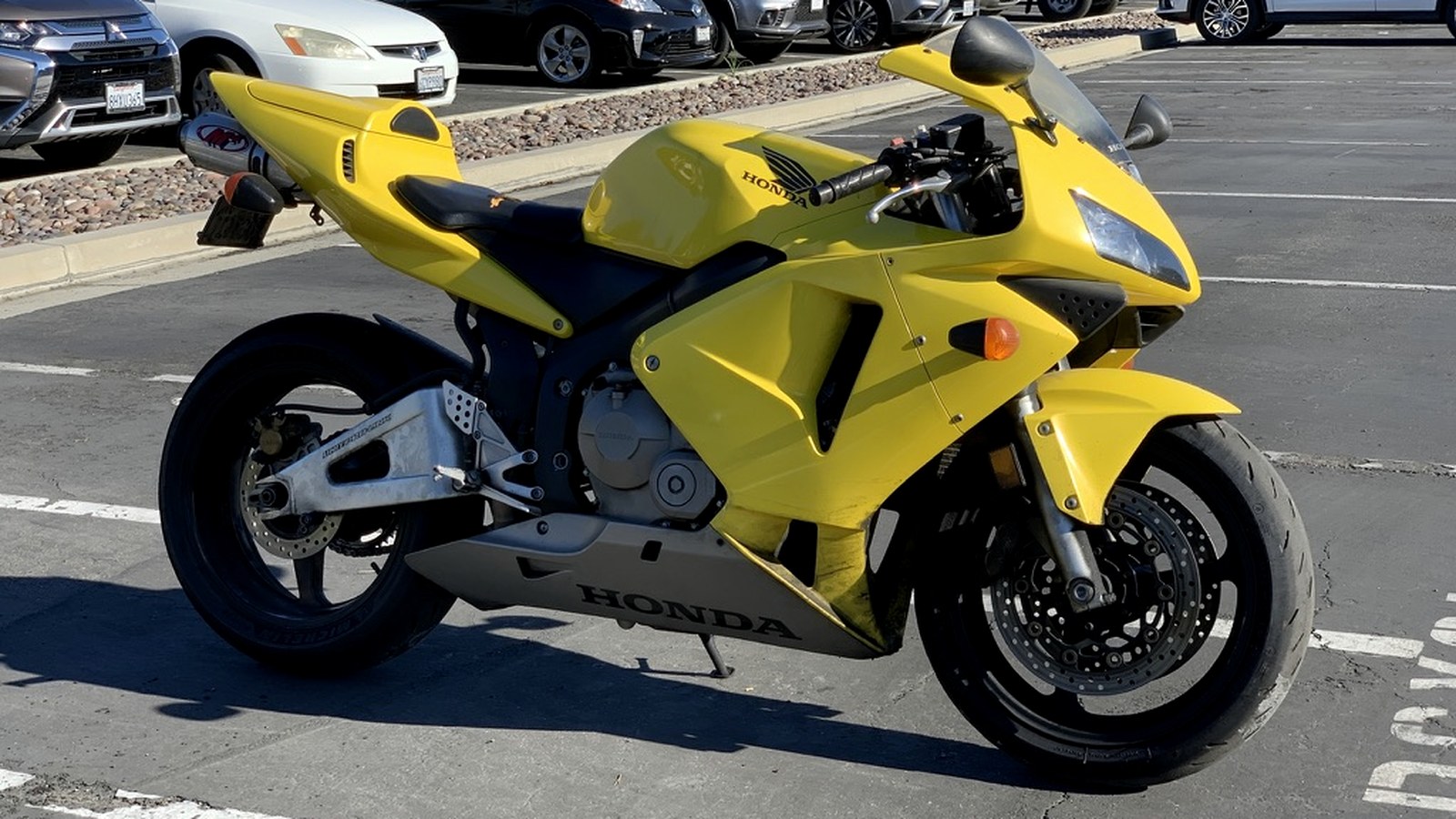
I own a 2003 Honda CBR600RR. By current sportbike standards, it is practically farm equipment.
There is no traction control rescuing a questionable decision. No riding mode politely suggesting that I reconsider my ambitions. The engine is fuel-injected, so there is a computer involved, but the riding experience is refreshingly short on electronic supervision.
It’s fast, unforgiving and occasionally frightening.
Which is part of why I still own the thing.
A modern motorcycle is safer and more sophisticated. In most measurable ways, it is better. But somewhere between making machines easier to operate and removing the operator from the equation, we started losing something worth keeping.
I’m beginning to think the same thing is happening to writing.
Jevons was talking about coal
Not long ago, I read an essay by Jeffrey A. Tucker arguing that artificial intelligence might make authentic human creativity more valuable. He reached for one of my favorite economic concepts, the Jevons Paradox, to explain why.
I liked the premise. The economics needed work.
In 1865, British economist William Stanley Jevons observed that more efficient steam engines were not reducing Britain’s appetite for coal. Greater efficiency made coal useful in more places, so total consumption increased.
That is the paradox.
It doesn’t follow that making artificial writing abundant will increase the price of human writing. Jevons was explaining resource consumption, not why someone might pay extra for an oil painting after the world fills up with synthetic pictures.
Still, Tucker’s argument raises a question worth asking.
What happens to our appreciation of the original when technology makes the imitation inexpensive and nearly limitless?
Driving or supervising
Consider the automobile.
Electric vehicles are quiet, responsive and extraordinarily quick. They are engineering progress. Yet the combustion engine hasn’t disappeared, and neither has the appeal of a manual gearbox, hydraulic steering, physical gauges or an exhaust note produced by combustion instead of a sound system.
Some enthusiasts are paying serious money for older vehicles that lack features manufacturers now advertise as essential.
This doesn’t mean EVs made every gasoline-powered car more valuable. Nostalgia doesn’t make an old car better transportation. But the appeal of a machine that demands participation is real.
Connected cars produce another version. We have enormous touchscreens, software subscriptions and enough electronic assistance to make an ordinary commute resemble a systems-management exercise. Some drivers are looking backward toward buttons, mechanical feedback and fewer conversations with the manufacturer’s servers.
There is a distinction between driving a machine and supervising one.
I prefer the former.
What abundance changes
AI is already capable of producing competent articles, images, music and persuasive advertising. Pretending otherwise won’t help working creatives.
Some machine-generated work is good. Some human work is terrible. Anyone who has spent an afternoon reading corporate LinkedIn posts has sufficient evidence.
The problem isn’t that machines can produce content. It’s that we spent decades treating production as though it were the valuable part.
More articles. More posts. More images. More material to occupy more screens for more seconds.
AI arrived and offered to give us exactly what we had been asking for.
Now we’re discovering that unlimited production doesn’t guarantee anything worth paying attention to.
A writer’s value isn’t confined to assembling sentences. It comes from experience, recognizing which questions deserve asking and knowing when the accepted explanation is wrong.
A photographer brings more than the finished image. Sometimes the value is in waiting three hours for the light. Sometimes it is knowing when to put the camera down.
Human effort guarantees nothing. We were producing mediocrity long before the computer offered to help.
But abundance changes what people look for. When polished prose becomes cheap, judgment becomes easier to notice. When attractive images become endless, the story behind a photograph matters. When cars become increasingly automated, mechanical involvement becomes something enthusiasts deliberately seek.
The old thing doesn’t always become more valuable. Nobody is replacing a washing machine with a washboard.
But not everything we do is about eliminating effort.
Some experiences matter because they demand something from us.
The real thing
Coca-Cola once built an advertising campaign around being “the real thing.” The line worked because people understood the difference between an original and an imitation, even when the imitation could perform the same basic function.
That distinction is beginning to matter in creative work.
AI will replace portions of paid production. Some clients will decide that adequate work at a fraction of the cost is adequate enough. There will also be a market for judgment, accountability, lived experience and an identifiable person behind the work.
That’s where I want to compete.
I use AI. I appreciate the speed and the research help. I appreciate spending less time on mechanical tasks. I have no desire to return to the days when finding one obscure statistic required an afternoon in old publications.
I also have no interest in surrendering the judgment that makes my work mine.
My old Honda is still in the garage. There’s no compelling practical reason to keep a 23-year-old supersport motorcycle when newer machines offer better electronics and improved safety.
Except that riding it requires me to be there. Completely.
The throttle and brakes respond to me. The consequences belong to me.
That’s why I wanted to ride in the first place.
It’s also why I wanted to write.
Source notes
- William Stanley Jevons published The Coal Question in 1865. Its chapter on the economy of fuel explains how economical use of coal can increase total consumption as new uses and industries expand. Source: Liberty Fund’s Econlib edition.
- Honda’s history of the 2003 CBR600RR documents its RC211V-derived engine, chassis and Unit Pro-Link rear suspension. Honda’s original 2003 release documents its PGM-DSFI electronic fuel injection. Honda did not add electronically controlled combined ABS to the CBR600RR line until 2009.
- Jeffrey A. Tucker’s October 8, 2026 essay, “Will AI Devalue the Real World?,” supplies the argument this essay answers. Tucker called the economist Henry Jevons. The economist was William Stanley Jevons.
- The Coca-Cola Company dates the launch of its “It’s the Real Thing” slogan to 1969.
- Hero image: Steven Mitchell / CreativeGuySteve. The photograph shows Steve’s actual 2003 Honda CBR600RR.