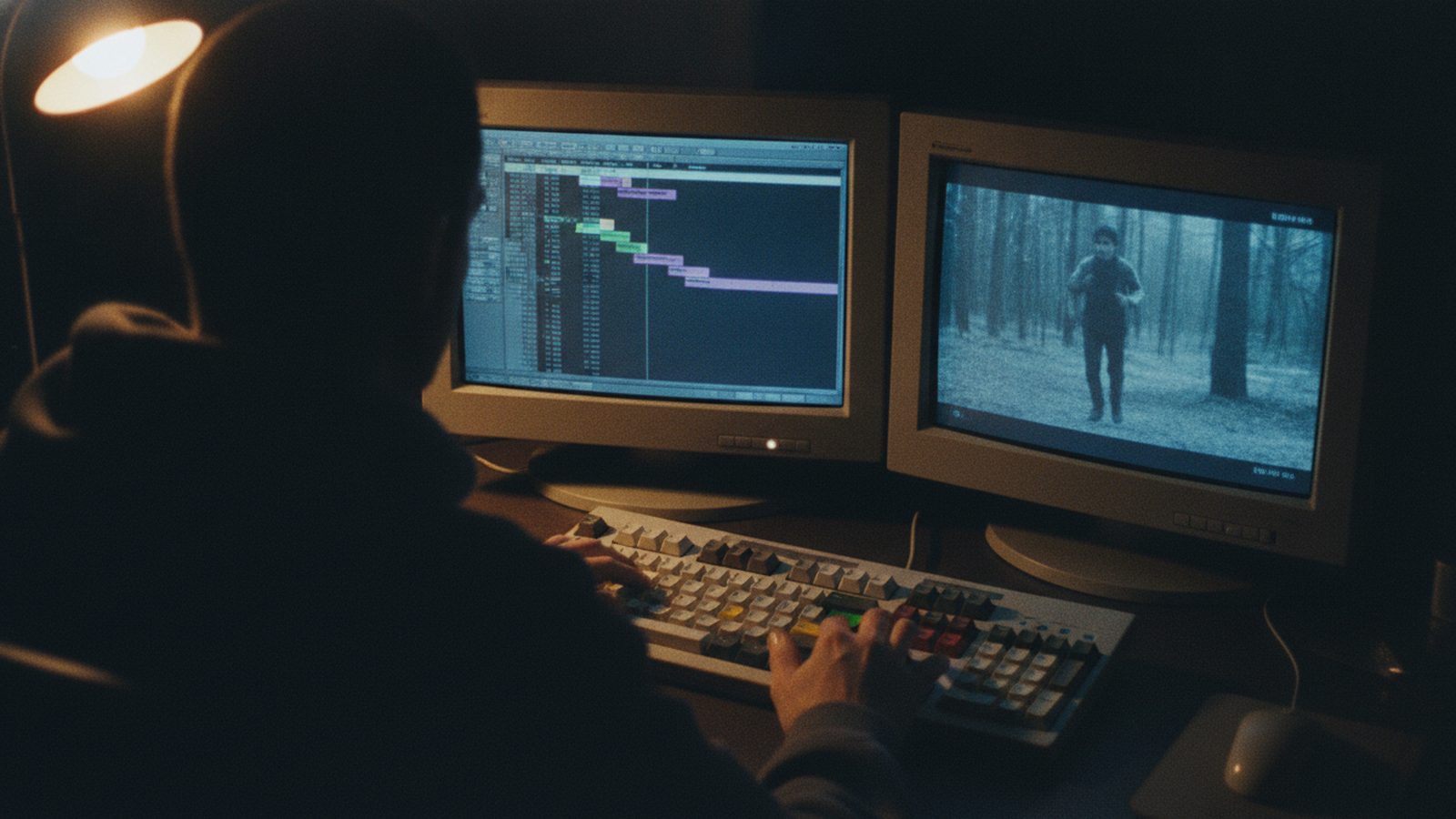
The first time I watched somebody work on an Avid, we were cutting a DirecTV spot at charlieuniformtango in Dallas in the early 2000s. I was blown away.
Editors had always said, “We’ll take care of it in post.” The joke worked because post-production was where mistakes went to become somebody else’s expensive problem. Then Avid arrived and made “post” look less like a repair shop and more like a second chance to direct the picture.
An editor could jump around the footage, try another cut and put the first version back without physically rebuilding the sequence. The machine didn’t know which performance was honest or when a pause had gone on long enough. It gave the person who knew those things more room to find the movie.
I thought of that this week when Ben Affleck defended the use of artificial intelligence in filmmaking.
The man selling the tool has a point
Affleck told Bloomberg’s Screentime conference that filmmakers tend to change their view once they sit with AI, understand what it does and feel that they remain in control. He called it part of a “longstanding series of technological improvements” in film and television.
He also said he used AI for “lots of things” while making his Netflix movie Animals, then declined to identify them. A magician, he argued, doesn’t walk out before the show and announce there’s another bunny under the table.
There is an obvious disclosure here. Netflix acquired Affleck’s AI filmmaking company, InterPositive, in March, and Affleck joined Netflix as a senior adviser. Netflix later disclosed paying about $587 million in cash for an acquisition completed that month, a figure Variety and Deadline tied to InterPositive.
He has done considerably better than most people who announce that a new technology is misunderstood, which is worth knowing and doesn’t make him wrong.
The panic around creative technology usually begins by treating the current workflow as sacred, when it was only the collection of tools, costs and inconveniences everybody had learned to tolerate.
We have watched this movie before
Aldus PageMaker helped move page layout onto the desktop in 1985. Adobe’s own history calls the software part of the alliance that revolutionized publishing. The crews assembling mechanicals, setting type and preparing camera-ready art didn’t experience it as a pleasant software upgrade, because whole pieces of the production business disappeared.
Then O Brother, Where Art Thou? put the entire picture through a digital color grade. Roger Deakins and Cinesite scanned the film at 2K, pulled the green out of Mississippi and gave the movie the dusty, faded look everybody now recognizes. It’s widely credited as the first feature to have every frame color-corrected digitally.
Nobody now gets their panties in a wad because a computer helped make Mississippi look like Mississippi after the rain had stopped for three years. They call it cinematography.
Photoshop followed. Its first release came in 1990, after an early version had already been used on The Abyss. Layers arrived in 1994. Adjustment layers and masks followed.
Suddenly an image could be changed without destroying the original, and “the photograph” became a more negotiable concept.
Lightroom gave photographers another way to develop, organize and revise their work. DaVinci Resolve put color, editing, effects and audio into a system that keeps absorbing tasks once handled elsewhere. Each of these tools moved the boundary between making the thing and fixing the thing, and speed was the least of it.
Writing went through its own quieter versions. Word processors made revision cheap. Desktop publishing let writers see the page before a production department built it. Search replaced hours spent digging through clips and reference books.
Spellcheck became ordinary enough that nobody now demands a disclosure when a writer avoids misspelling “accommodate.”
AI feels different because it can produce something that resembles judgment. Sometimes it resembles judgment the way a wax museum resembles a dinner party. Across the room, it may pass. Up close, something is wrong with the eyes.
That’s a serious distinction, though it doesn’t prove the tool belongs outside the building.
The tool changes the job
The sentimental version of technology history says the new tool removes drudgery and leaves creative people free to create. The people whose drudgery paid the mortgage may remember it differently.
PageMaker did not preserve every typesetting job. Avid didn’t preserve every part of film editing as it had been practiced. Digital photography closed labs. Online publishing dismantled production departments and then asked one person to write the copy, size the photograph, build the page and promote it before lunch.
AI will remove work. It will also create new work, combine jobs that used to be separate and expose anyone who was being paid mostly because the old process was difficult to operate. Anyone telling you otherwise is selling something, and arguing that the current process deserves preservation because jobs depend on it isn’t much better.
The question is where human judgment remains necessary and who controls the tool. Affleck makes that control central to his argument. Netflix describes InterPositive as technology built by filmmakers to protect and expand creative choice. That is corporate copy, but it names the right standard.
If AI lets a director repair a background, reframe a shot or correct lighting without rebuilding a set, that belongs in the family with Avid and Photoshop. If it takes an actor’s face, a writer’s voice or somebody else’s work without permission and turns consent into a software setting, it’s a rights problem wearing a productivity badge.
Get close enough to see where it fails
Affleck’s best point was that the terror shrinks when you use the thing long enough to discover its failures.
I’ve seen the same thing in writing. From a distance, the machine looks like it knows everything and writes instantly. Work with it every day and the glamour wears off. It loses the thread, smooths away the opinion, invents confidence and occasionally returns a sentence dressed for a meeting nobody is attending.
That knowledge is useful, and familiarity doesn’t require surrender. It gives the person doing the work enough experience to decide what should be delegated, what must be checked and what should never have been handed to a machine in the first place.
The same goes for anyone buying content. A marketing team can get a thousand competent words for the price of a prompt, so competent words are no longer what it’s paying for. It’s paying for the person who knows which claim needs a source, which sentence sounds like everybody else’s and when a draft is finished rather than merely long.
The editors who learned Avid still cared about the cut, and Photoshop left the photographer responsible for the light. Each tool made taste more visible, because operating the old machinery was no longer enough to justify the invoice, and AI is doing it again.
“We’ll take care of it in post” once meant there was another room full of people waiting to solve the problem. Increasingly, it means the person who noticed the problem has the means to fix it.
Source notes
- The A.V. Club’s report from Bloomberg Screentime covers Affleck’s Oct. 1 remarks, including “lots of things,” the magic-show comparison and the “longstanding series of technological improvements” framing. ComingSoon’s report covers his point that hands-on use makes AI “a knowable thing.”
- Netflix’s March 5 acquisition announcement describes InterPositive’s purpose, Affleck’s role and his position on preserving human judgment.
- Netflix’s second-quarter 2026 Form 10-Q reports an approximately $587 million cash acquisition completed in March without naming the company. Variety and Deadline identified it as InterPositive.
- American Cinematographer’s account of O Brother, Where Art Thou? documents the full-picture digital workflow, the 2K scans and Roger Deakins’s use of digital color work to replace Mississippi’s greens with dry browns and yellows. The article notes earlier films had also been digitized, while O Brother used the process across the picture principally to create its look.
- Adobe’s publishing history dates PageMaker’s role in the 1985 desktop-publishing shift. Adobe’s Photoshop history covers its 1990 release, early use on The Abyss, layers, nondestructive editing and Lightroom’s 2007 launch.