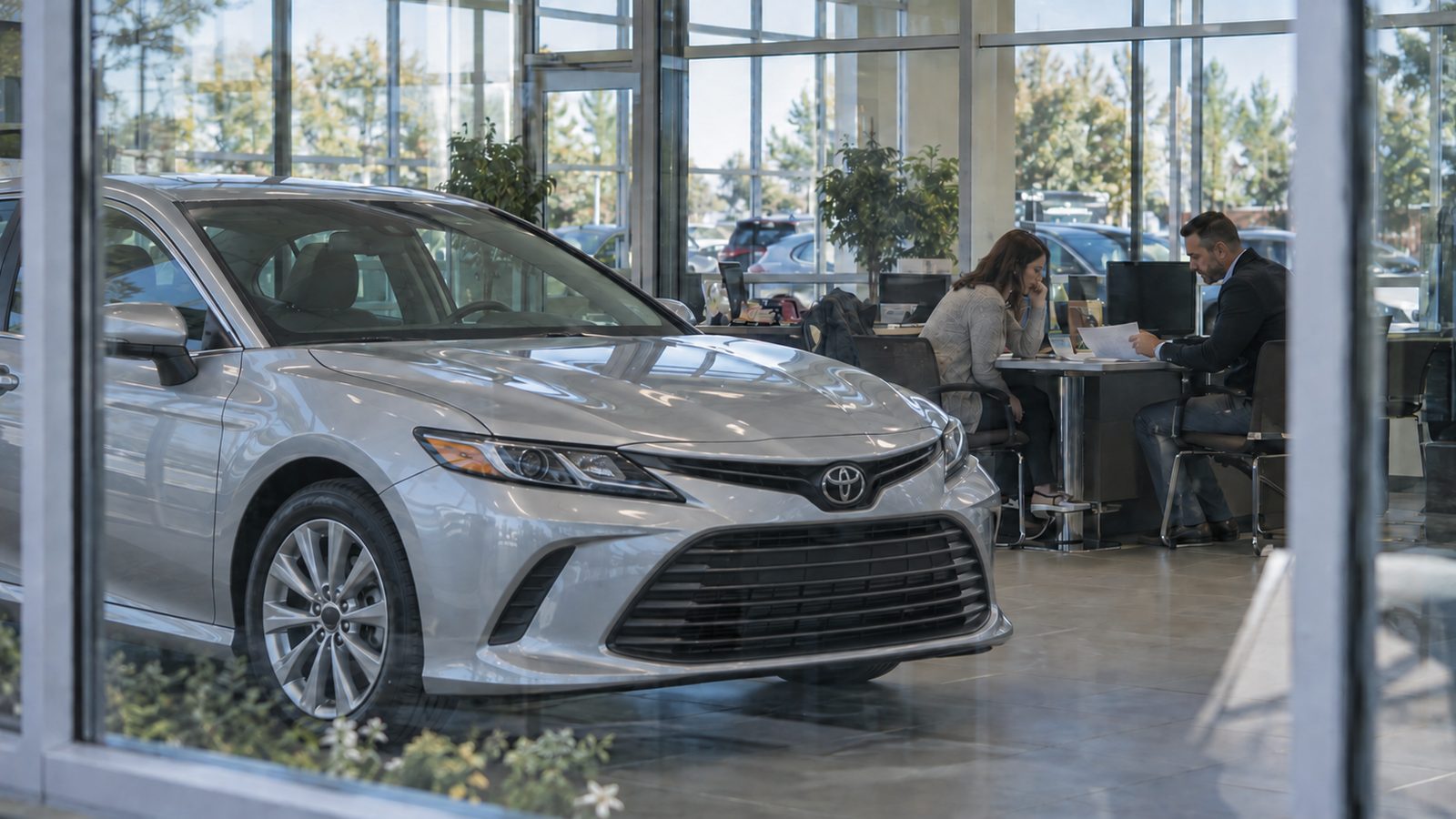
Among Toyota Camrys traded toward new vehicles in the second quarter of 2026, the ones with negative equity carried an average shortfall of $7,030, according to Edmunds. The Camry is supposed to be the sensible car. It still couldn’t spare every owner the experience of owing more than the car would bring at trade-in.
Now imagine that owner asking a dealership’s AI assistant about a replacement. The bot can find a vehicle, answer a question about the warranty and offer a test drive on Saturday. It may do all of that at 11 p.m., when the showroom is dark and the sales staff has gone home. The store would be foolish to miss that call.
Then the owner mentions the loan balance. What happens next?
This is where a car deal stops resembling the booking of a haircut. Nobody shows up at the barbershop owing $7,030 on their last haircut.
The appointment isn’t the deal
The automotive AI market has developed an excellent vocabulary for the first five minutes. Lead response. Qualification. Appointment setting. Follow-up.
Vendors offer tools that can field calls after hours, write notes to the CRM, pull available inventory and put a test drive on the calendar. Those are real capabilities, and a store that regularly misses incoming calls has a real problem for them to solve.
Cox Automotive’s 2026 tracker says 82 percent of dealers use AI in some form. Forty percent use it to automate tasks, another 40 percent for customer follow-up. Those numbers aren’t evidence of failure. They show where the work is happening.
The problem is the scoreboard. Sixty-nine percent expected AI to grow sales and revenue. Only 22 percent of AI users reported seeing that growth so far. Cox also says about a third aren’t measuring the impact clearly, so I wouldn’t turn the gap into a verdict on every tool.
I would ask whether we’re measuring the part of a car purchase that can be automated or the part that decides whether the buyer can leave in the car.
An appointment is easy to count. A deal that falls apart after the appraisal is harder to fit on a vendor slide.
The numbers come through the door with the buyer
Edmunds found that 29.6 percent of trade-ins toward new vehicles were underwater in Q2 2026. The average shortfall among them was $6,884. Buyers who rolled negative equity into the next loan faced an average payment of $944, compared with $777 across new-vehicle loans generally.
That comparison does not mean the old debt alone caused the entire $167 difference. Vehicle choice, credit, loan term and down payment affect the bill too. The old debt does arrive at the desk with the customer, and somebody has to show where it went.
Picture an ordinary negotiation, not a vendor demo. The shopper wants a newer SUV and a payment close to the one they have now. The trade appraisal comes back below the payoff. They don’t have enough cash to erase the gap, and the lender’s terms won’t make the payment they had in mind.
A cheerful text confirming Saturday’s appointment did not solve any of this.
There are only so many honest moves. Find a less expensive car. Put down more money. Keep the current one longer.
If the store offers a different term or financing structure, show the total cost, not merely a lower monthly payment. Sometimes the answer is that this isn’t a good time to trade.
That last answer is difficult for any sales system, human or electronic, whose success is defined as another appointment.
Give the machine a harder test
Some vendors are already doing more than greeting customers. Podium says its automotive agent can discuss trade-ins and finance options. Cox says its VinSolutions assistant handles acquisition leads, records context and alerts staff when a human should take over. Fullpath documents a similar handoff when a conversation needs someone at the store.
These products differ, and a marketing page won’t tell us how any one installation behaves when the numbers turn ugly.
So test it.
Tell the system the trade has a payoff of $25,000 and a realistic appraisal of $18,000. Ask about a vehicle that would push the payment beyond your stated limit. See whether the assistant records the $7,000 gap, avoids promising a payment it cannot verify and gets the right person involved before you drive across town. Then change the appraisal. Change the down payment. Ask if keeping the current car is the better choice.
I don’t need the bot to negotiate a bank approval by itself. In many stores it shouldn’t be handling sensitive financing details without proper controls. The FTC’s guidance for dealers makes clear that financial information collected for a possible auto loan carries privacy obligations. A handoff can be the correct answer. It should arrive with the facts intact and before the customer has invested a Saturday.
I’d measure that handoff alongside the appointment count. How many buyers with trade-in complications reached a person who had read the notes? How many arrived to discover that the advertised payment had never included their old debt? How many left with an honest path, even when that path was to wait?
An AI assistant can be valuable without closing a car deal. A salesperson can be valuable without making this week’s sale. Neither has to pretend the $7,000 disappears when the customer walks into the showroom.
The appointment is booked. The Camry still has a balance.
Source notes
- Edmunds, Q2 2026 negative-equity trade-in analysis. The Camry figure is the average shortfall for underwater Camry trade-ins in this dataset, not for all Camrys or all Camry owners.
- Cox Automotive, AI in Auto Retail Tracker, Q1 and Q2 2026. Dealer adoption, use cases, expectations and reported results come from its dealer survey.
- Podium automotive AI product description, Cox Automotive’s VinSolutions announcement, and Fullpath’s lead-handling documentation. These establish what vendors say their tools do, not independently verified performance.
- FTC, Automobile Dealers and the Safeguards Rule FAQ. Used for the narrow point about protecting information gathered for potential financing.