Ferrari debuted the Luce this week and the automotive internet spent three days trying to figure out which part was worse: that the company hired Jony Ive's design collective to build a $640,000 EV that looks like a Honda Accord crossed with an Apple Store, or that Ferrari's former chairman Luca di Montezemolo publicly demanded they remove the prancing horse logo. When the man who ran the company for 23 years won't put his name on the car, you have achieved something remarkable. Not in the way you intended.
The Luce is what happens when a great brand decides its actual customers are the problem. You fire the designers who understood the heritage, hire a Silicon Valley aesthetic consultant, and produce something that makes Lucid fans say "that looks familiar." Ferrari's stock fell six percent on the reveal. The market has opinions.
On the other side of the industry and a few hundred thousand dollars below Maranello, General Motors is planning a Buick sedan.
Buick, for those old enough to remember what it was, was the doctor car. Not the surgeon with the DeVille, the GP who needed to maintain appearances without the Cadillac arithmetic making sense. Dr. Merritt in my neighborhood drove an Electra 225, which Buick marketed as affordable luxury with what appears to have been a straight face. Land yacht. Covered rear wheel wells. Button-and-biscuit upholstery in smooth nylon that felt like the inside of a 1974 waiting room. The Park Avenue was the more-is-more version of a car already doing its best Cadillac impression.
My friend Bob Mac had a LeSabre. Seventies vintage, V8 that sounded more serious than it performed, and an ignition system that had made a separate peace with the concept of requiring a key. You could start it without one if you knew where to put your fingers. Bob treated this as a feature.
Then there was the Regal. Two doors, college parking lot, usually found next to a Mercury Cougar belonging to someone equally confident in his own judgment. The Regal wasn't trying to be a doctor car. It just wanted to be driven somewhere inadvisable by someone who had recently declared a major.
The positioning made sense. Cadillac without the commitment. Same GM architecture, same general DNA, a few thousand dollars of psychological distance between you and the question of whether you could really justify the Cadillac. Then Buick decided it was an SUV company. The Electra went away. The LeSabre, the Regal, the Century, all retired. What remained is a lineup of crossovers built mostly in China, powered by turbocharged four-cylinders, indistinguishable at 40 mph from the Chevrolet Equinox at the adjacent light. The brand that sold aspirational near-luxury to a generation of American professionals became a nameplate on a vehicle that could have worn five other badges.
Which makes the news worth paying attention to.
The planned sedan will ride on the Alpha 2 platform, the same architecture underpinning the next Cadillac CT5 and the returning seventh-generation Camaro. Rear-wheel drive. Powertrain options reportedly ranging from a turbocharged four-cylinder to the twin-turbo 3.0-liter V6 that makes 360 horsepower in the CT5-V. Expected sometime in late 2027 or early 2028, pricing likely somewhere in the mid-$30,000 range. The name is unconfirmed but Buick filed a trademark for Electra in 2025, which the brand already uses in China on a range of new-energy vehicles.
The renderings here are mine. I put them together to show what I think this car should look like, and the direction writes itself. Sharp nose, clean proportions, Avenir badge on the C-pillar. European without apologizing for the Buick grille. A car that reads like something people would want to own, not something that would generate think-pieces about disruption.
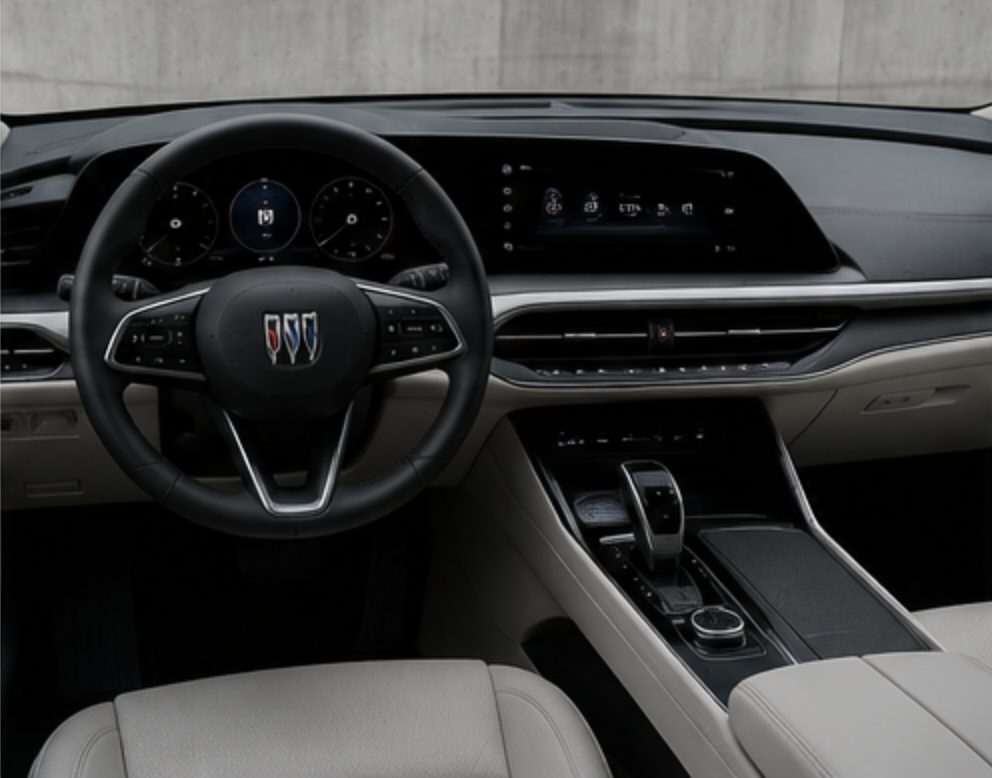 Rendering by Steve Mitchell / CreativeGuySteve.com
Sedans Are Coming Back
There is a real market for affordable rear-wheel-drive sedans and the people running automotive companies have been pretending otherwise for about a decade. The theory was that Americans had permanently converted to SUVs and crossovers and would never return, which is the same kind of thinking that led people to call the hybrid market a niche in 2019. Hybrids are now 40 percent of Toyota's US volume. The sedan is not dead. It went through an extended period of being ignored by the companies that could afford to make it.
Audi pulled the RS7 from the US market and let the A7 fade. BMW hedged the 3-Series toward SUV territory on every refresh. Ford killed the Fusion and the Taurus and handed the market to nobody. The vacuum is real. A well-priced RWD sedan from a domestic brand with a serious platform under it has room to run. Buick has a chance to be the only player in a segment that the Germans vacated on ideological grounds.
The China Problem
Here is where you need to pay attention, because GM has already run this experiment and it did not go well.
The current Buick Envision is assembled at the SAIC-GM Jinqiao South plant in Shanghai. The current tariff structure adds 47.5 percent to the cost of any vehicle imported from China. That breaks down as a 2.5 percent standard duty, a 25 percent Section 301 tariff, and a 20 percent IEEPA reciprocal tariff, all applied concurrently. GM responded to the math the only way it could, by raising the Envision's price roughly five thousand dollars. In Q4 2025, Envision sales fell 60.9 percent year over year. The 47.5 percent tariff is not a negotiating position. It is a ceiling that turns a $35,000 Buick into a $42,000 Buick before the dealer touches it.
GM announced in January 2026 that the next Envision will be built at Fairfax Assembly in Kansas City, starting in 2028. That is the company saying, in the quietest possible way, that it learned something.
The Alpha 2 platform offers a reason for optimism. The next CT5 is expected to be built at Lansing Grand River Assembly in Michigan. The new Camaro shares the platform. Both are domestic production. If Buick's sedan follows the same architecture down the same supply chain to the same plant type, you have a car that can actually be priced where it needs to be priced to matter.
If GM decides instead to build it in China and ship it to the US, because the SAIC-GM partnership runs deep and the Chinese manufacturing cost structure is genuinely attractive, they will learn the Envision lesson a second time in the same decade. The tariff environment is not going away. The political environment around Chinese-assembled vehicles sold in the US is not softening. A mid-$30,000 Buick sedan absorbing 47.5 percent in import duties is a mid-$40,000 Buick sedan, and a mid-$40,000 Buick sedan is competing with the CT5 it was designed to undercut.
Build It Here
The sedan market needs what this car could be. Affordable, rear-wheel drive, on a real platform, from a brand that used to know how to make something people aspired to own before it spent twenty years trying to convince Americans it was secretly German.
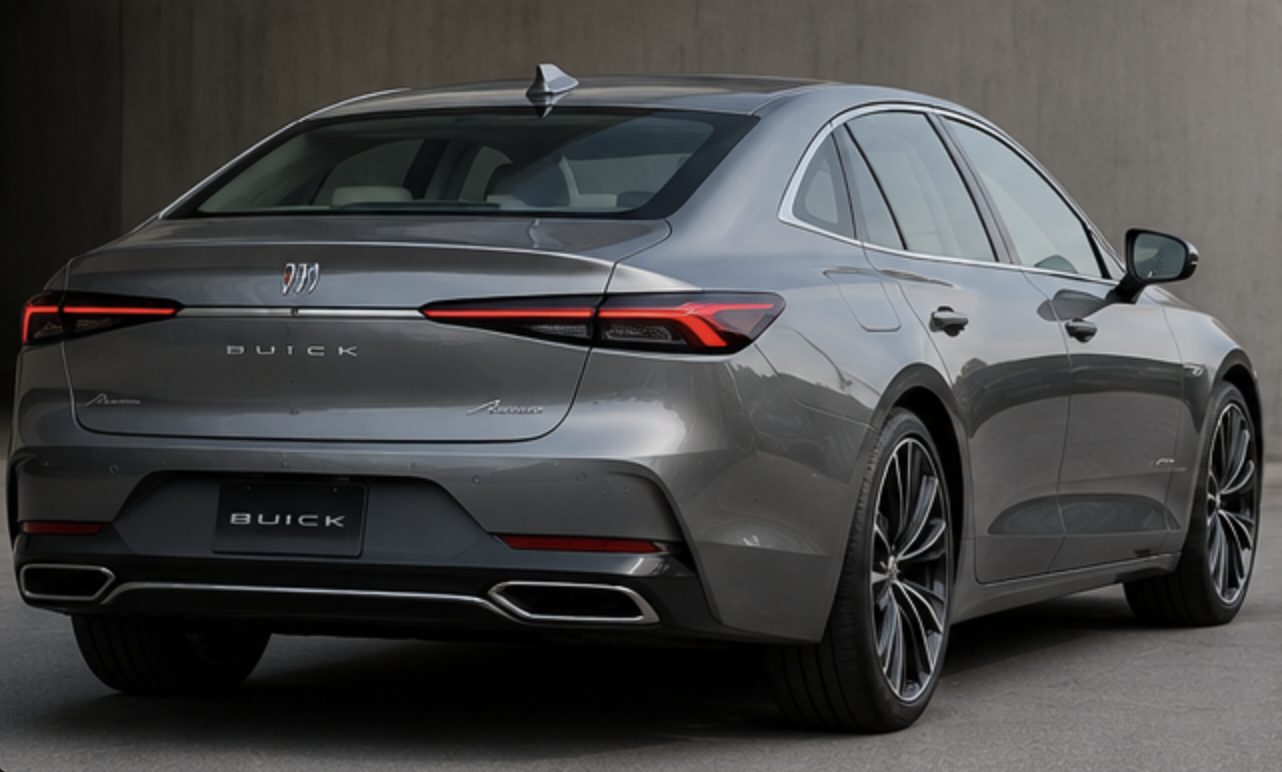 Rendering by Steve Mitchell / CreativeGuySteve.com
The bones are right. The platform is serious. If I have the taste to design this, imagine what a real studio would do. Not Ferrari, of course. And Ferrari has helpfully demonstrated, at great expense, exactly what not to do when you make a four-door car people are supposed to want.
Build it in Michigan. Price it honestly. Do not let Jony Ive near it.
Frequently Asked Questions
When will the new Buick sedan be available?
Production of the Cadillac CT5 on the shared Alpha 2 platform is expected to begin in fall 2027 at Lansing Grand River Assembly. The Buick sedan is expected to follow a similar timeline, with sales possible by late 2027 or early 2028. No official announcement has been made by GM.
What platform will the new Buick sedan use?
The new Buick sedan is expected to ride on GM's updated Alpha 2 platform, which will also underpin the next-generation Cadillac CT5 and the returning seventh-generation Chevrolet Camaro. The platform retains rear-wheel drive as its base configuration.
What will the new Buick sedan cost?
No pricing has been confirmed. Given that the current Buick lineup starts just over $25,000 and the platform is shared with the CT5, a $50,000 vehicle, GM is likely to price the Buick sedan somewhere in the mid-$30,000 range to avoid competing directly with its own Cadillac.
Will the new Buick sedan be built in the US or China?
This is the central unanswered question. GM's deep SAIC manufacturing partnership in China makes Chinese assembly technically possible, but the current tariff structure adds 47.5 percent to the cost of any vehicle imported from China. The Buick Envision, currently built in Shanghai, absorbed a roughly $5,000 price increase under those tariffs and saw sales fall 60.9 percent year over year in Q4 2025. GM announced in January 2026 that the next Envision will move to Fairfax Assembly in Kansas City. Whether the sedan follows the same domestic path is unconfirmed.
What happened with the Ferrari Luce?
Ferrari unveiled the Luce, a $640,000 EV sedan designed by LoveFrom, Jony Ive's design collective, in May 2026. The response was severe: Ferrari's stock dropped six percent, the car was compared to a Honda Accord and described as an Apple Store minivan, and former Ferrari chairman Luca di Montezemolo publicly asked that the prancing horse logo be removed. It became an immediate reference point for what happens when a heritage brand lets Silicon Valley aesthetics override institutional design knowledge.
What will the new Buick sedan be called?
Buick filed a trademark for the Electra name in 2025, which it already uses in China on new-energy vehicles. Electra is a name Buick used from 1959 through 1990. Whether that name lands on the US sedan is unconfirmed, but the trademark filing and the brand's existing E-name lineup make it the most likely candidate.