In 2022, BMW decided to charge $18 a month to activate the heated seats in cars that already had the hardware installed. The resistive elements were physically in the cushions. The warmth was there. BMW was selling access to something the customer had already paid for and framed this as a new revenue stream. Customers did not frame it that way. BMW backed down in 2023 and called the reversal a strategic realignment, which is how corporations say they misread the room.
Toyota, during this same period, was running a program in Japan that worked the other direction.
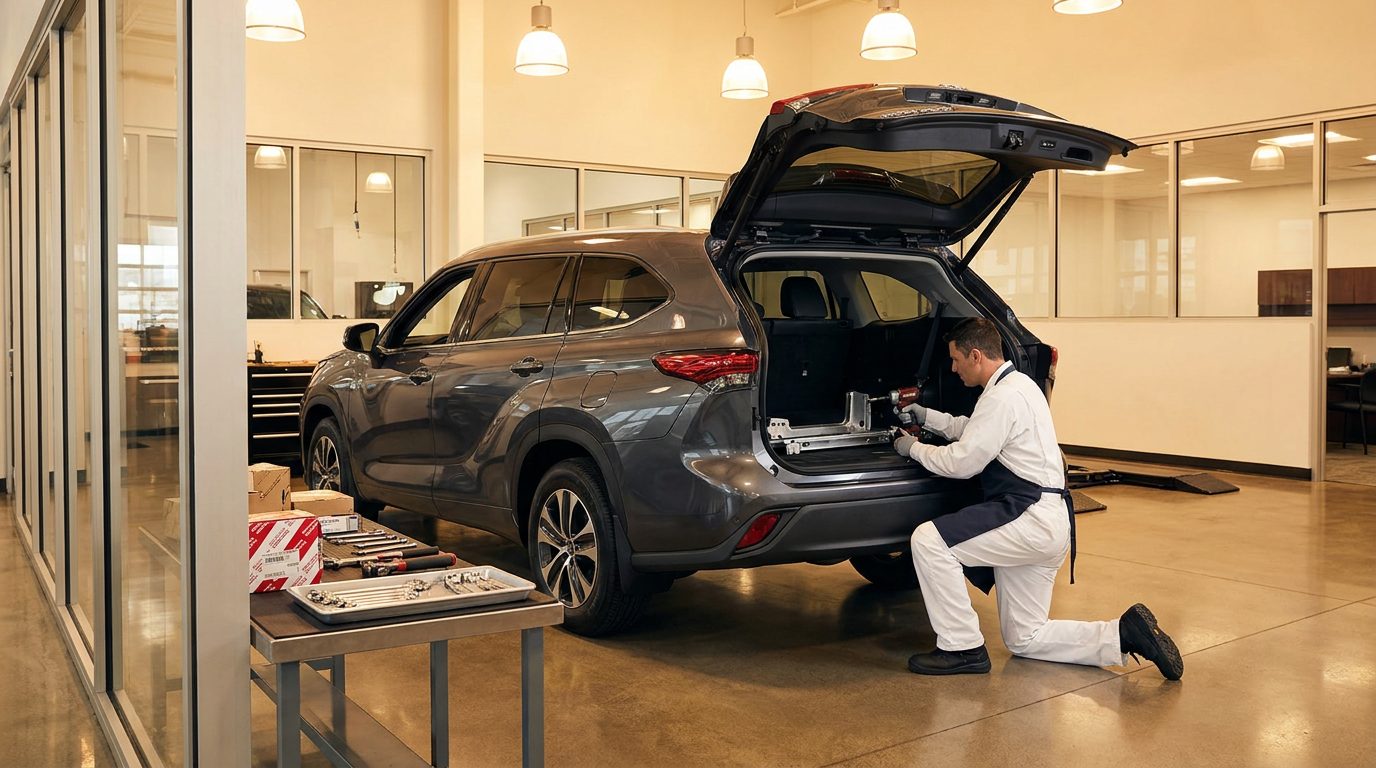
It is called Toyota Factory Upgrade — formerly Kinto Factory, same idea. You own a Toyota or Lexus, you want something new on it, you enter your chassis number on a website, see what the factory will actually install, and book an appointment at a dealer. Factory parts. Factory procedures. The warranty stays on.
The eligible vehicles list is worth reading slowly. A 2004 Hiace Van qualifies. A 2009 Prius. Cars that were new when the iPhone was still a rumor. The menu includes USB-C ports, remote start, remote A/C systems, digital displays, Lexus grille conversions, and F Sport brake calipers in orange — which, on a car that old, is a choice, and a perfectly defensible one. For the Lexus IS there is a full performance upgrade package. For a car that might be going on fourteen years old.
Toyota's position is that the car you bought is still worth maintaining. They will back that position with genuine parts and a factory warranty. BMW's position, briefly, was that you needed to keep paying for what you already owned. These are different philosophies and they produce different customers.
The Business Case the Industry Is Missing
Service departments at franchised dealerships run 50 to 76 percent gross margin. New car front-end gross on a good day runs three to five percent. A $1,500 factory retrofit at 55 percent gross puts $825 in the service lane on a customer who drove in voluntarily, is not negotiating a trade-in, and is not cross-shopping the dealer across town. Run ten of those a week out of one bay and you are looking at $429,000 in annual gross. The customer drives home in the car they already own, which now has a factory warranty on something new attached to it. They will probably come back.
One major American automaker — not Toyota — currently clears nearly a third of its total vehicle profits from accessories. Toyota is building something adjacent to that, except the customer leaves feeling upgraded rather than processed. These produce different word-of-mouth, which produces different customers, which eventually produces different balance sheets.
The Question Nobody Is Asking About the US Market
Toyota has not announced Toyota Factory Upgrade for the United States. The conditions here would argue for it.
The average American passenger car is now 14.5 years old. People are not keeping their cars out of sentimentality. They are keeping them because new cars average $50,000 and the financing rate makes the math worse. They are not in the market for a new vehicle. They are in the market for a reason to stay in the one they have.
A factory-backed upgrade program does something OTA updates cannot. Software updates fix what the car knows. This changes what the car has. Those are different problems and the aftermarket has been solving the second one for decades, without factory backing, without warranty coverage, and without Toyota's parts supply chain behind it.
If this program comes to the US, the competition is independent shops, parts suppliers, and the buyer's own inertia. The rest of the industry spent the last three years trying to charge monthly for features already bolted to the car. Toyota is figuring out how to add new ones and get paid once. One of those approaches builds customers. The other one is still in litigation.
Off-Spec: The Automotive Intelligence Brief
OEM strategy, fleet economics, and the business of how cars actually get sold. No press releases. No puff pieces.