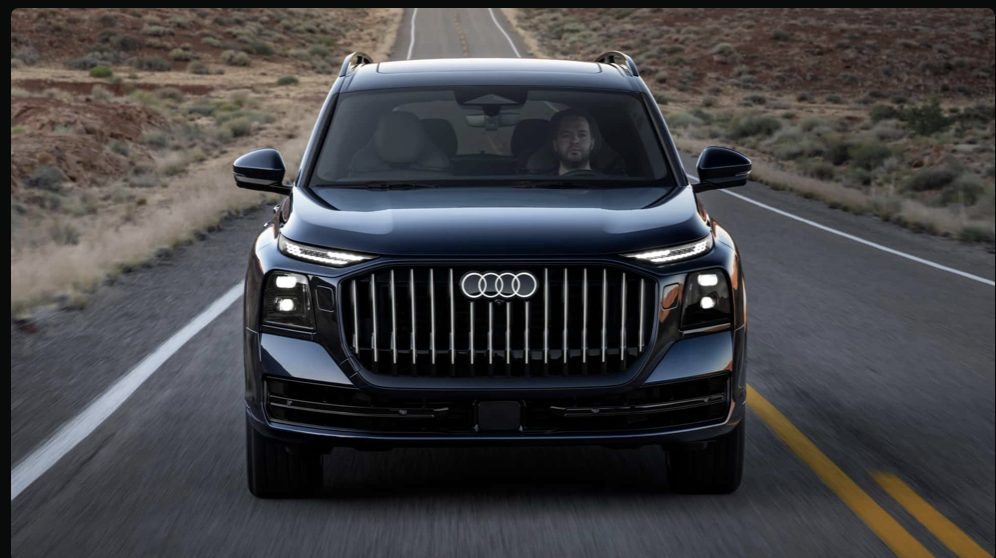
Audi built its largest SUV ever and unveiled it in New York this week. The Q9. 209 inches long. Twin-turbo V8 in the SQ9 making 591 horsepower. Three rows of seats, 7,700-pound tow rating, and a Bang & Olufsen system with 22 speakers and actuators in the front seats that vibrate to the music. Starting at $89,095.
It is a technically impressive vehicle. It is also the kind of car you walk away from and immediately forget what it looked like.
That is not a small problem when you are spending ninety thousand dollars.
The BMW X7 is a car that people argue about. The kidney grilles are too large and have been for three generations. BMW's response has basically been "we know, keep watching." Stand an X7 next to the Q9 and the X7 suddenly has the stronger position. Not because the X7 is beautiful. Because the X7 is something. It decided what it wanted to be and committed to it with the kind of confidence that either earns your respect or ruins your week.
The Q9 has not made that decision.
Audi applied this same design language to the Q3 in 2025, then stretched it to the Q7 in June. Now it covers the flagship. The Drive called it "the same sausage, different lengths." That is accurate and charitable. From the front you get a wide vertical-slat grille that is large without being distinctive, split DRL strips above the main headlights, and smooth, unbroken surfaces that communicate nothing in particular. The optional OLED taillights in the rear are genuinely interesting. The other 80 percent of the car is mashed potato.
If you have to be told it is a premium vehicle, it is not doing its job.
Genesis and Hyundai have been building full-size luxury SUVs with massive grilles and clean surfaces for years. They do it well. The Q9 does not look like a copy of their work, but it lands in the same visual category. Tasteful. Inoffensive. Unmemorable. Audi's flagship SUV occupying the same shelf as a Korean brand is not where this needed to end up.
The interior is where it gets theological.
Audi spent real money in here. The gauge cluster and infotainment screen sit under a single piece of curved glass. A passenger touchscreen is standard. The glass roof can go opaque at the touch of a button. The Bang & Olufsen system mentioned above vibrates your seat. These are genuinely impressive features.
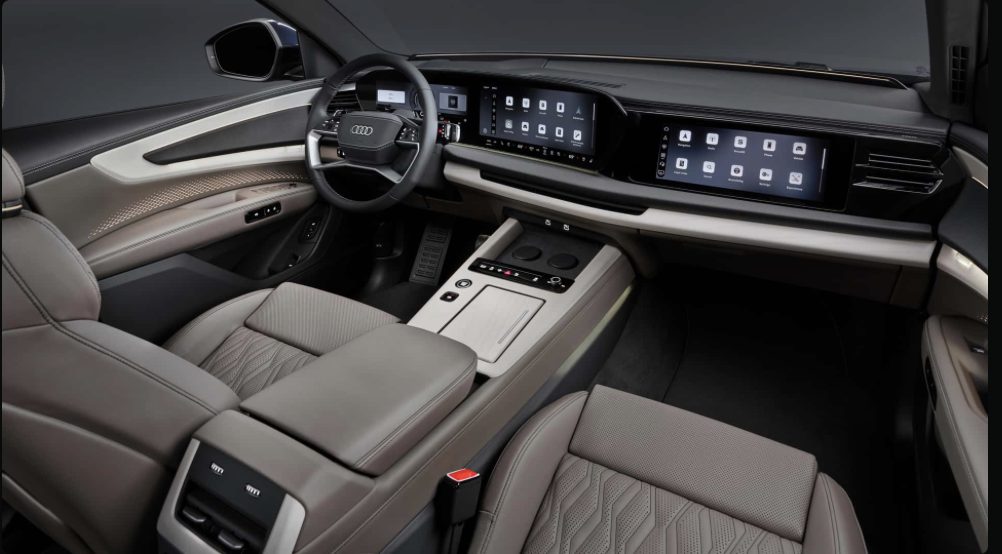 The triple-screen setup under curved glass. The volume knob is to the right of center console. One of them.
The icon grid on the infotainment screen looks like an Android tablet. Not a premium one. Just one of them. Flat squares, the kind of UI that ships when nobody asked the hard question before the product went out the door. Mercedes builds a screen setup I find excessive. BMW's iDrive still has personality. Audi's screens at $89,000 look like something that shipped with a mid-range phone in 2022. There is one dedicated volume knob on the center console. They should put a plaque on it.
The Q7 told this story when it debuted in June. The design language was already locked, the direction already set. Anyone paying attention could see where the Q9 was headed. Audi has been working on this vehicle for years. This is what that work produced.
I put together what an RS Q9 might look like on this platform. Honeycomb RS grille. Fender flares. Red Brembo calipers through dark spokes. Quad exits through a real diffuser. A car that walks into the room like it knows something.
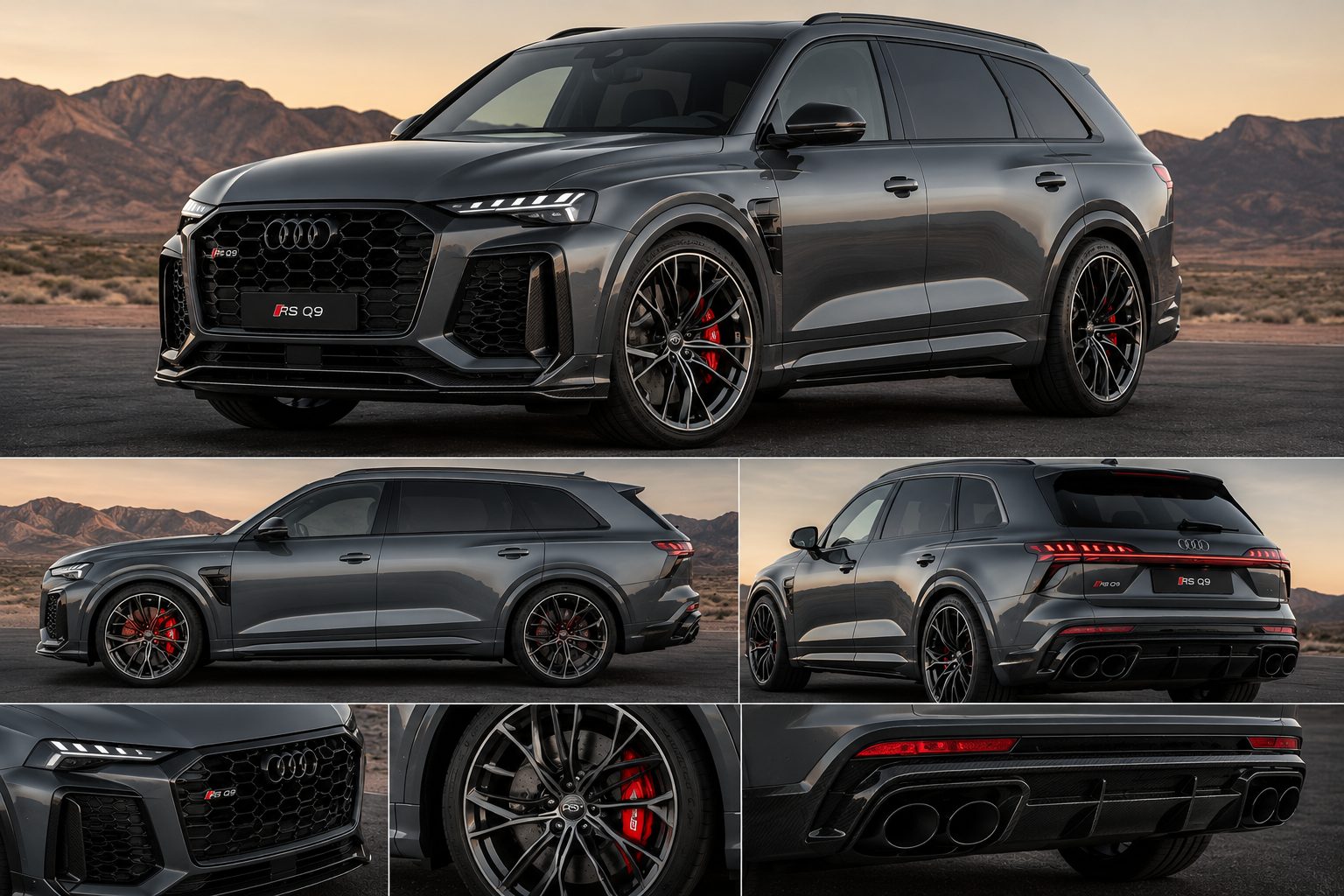 An RS Q9 concept. This is not the car Audi built.
Audi did not build this.
There is an expensive reality here. The design language that produced the Q9 runs across the entire SUV lineup now. Reversing it costs more than the SQ9's sticker price. Audi knows this. The Q9 will get a refresh eventually. That correction will not be cheap, and the market will have already decided what it thinks.
The car will sell. It is large, capable, genuinely comfortable, and loaded with technology that mostly works. The cupholders fit Stanley mugs. Audi mentioned this in the press materials.
God bless them. They built a great SUV. I just wish they cared what it looked like.
B2B automotive and fleet content that earns its place
Strategy, editorial, and long-form content for OEMs, fleet operators, and transportation brands. No padding. No filler.